Turkeys in Public Space
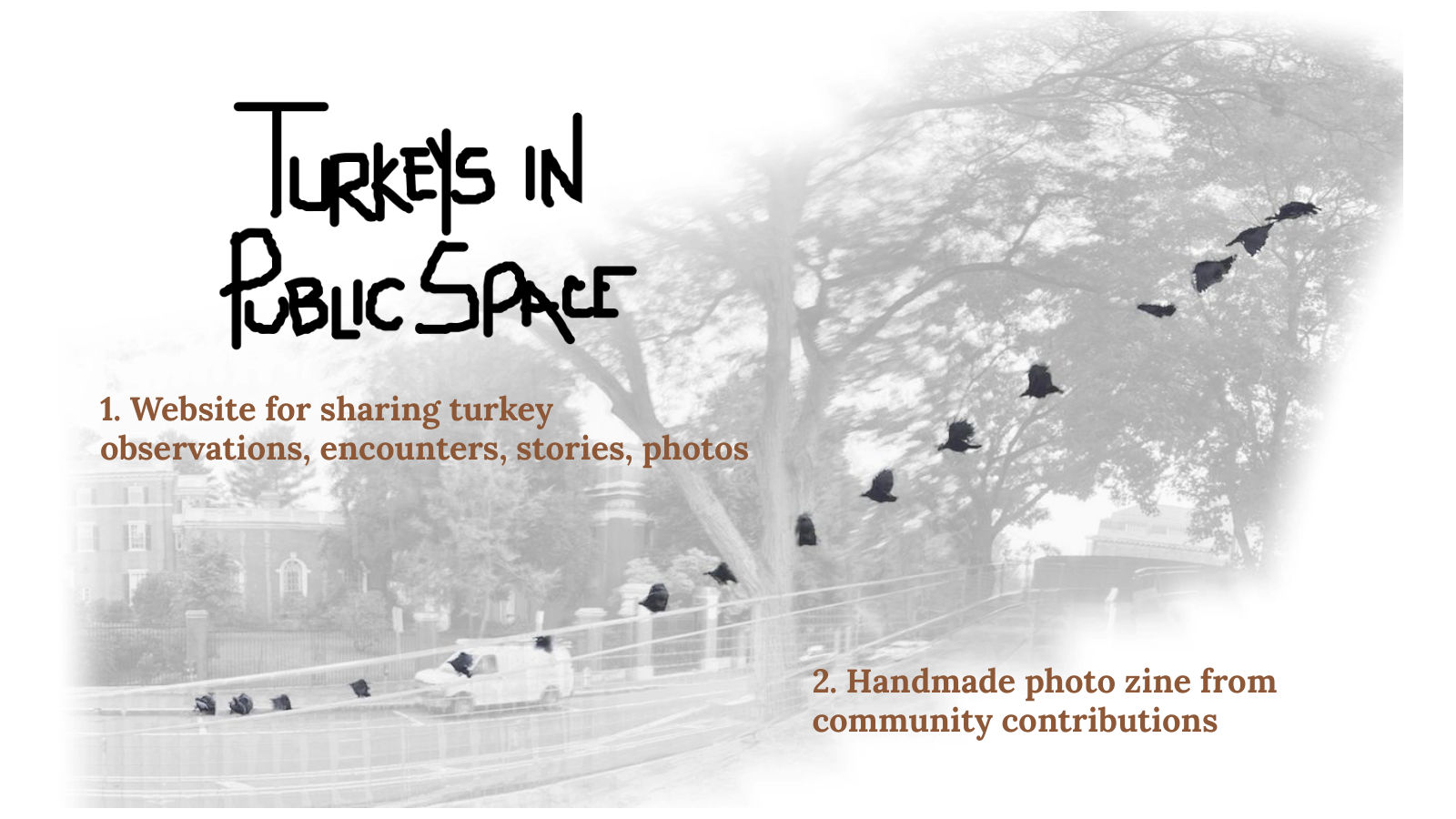
With Quinn, I’ve been working on a project called Turkeys in Public Space which is about documenting the turkeys that live in and around my neighborhood in Cambridge, MA.
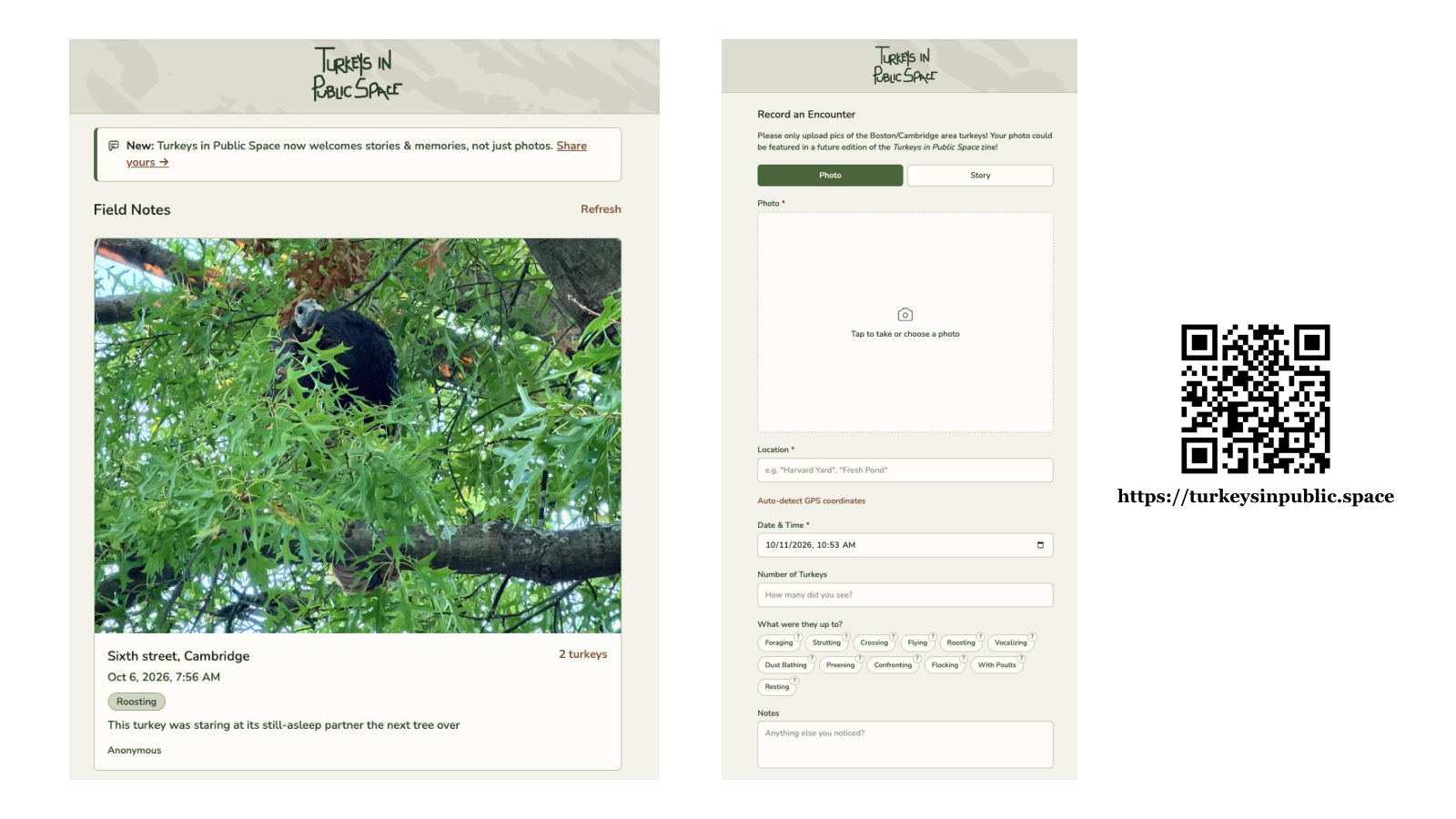
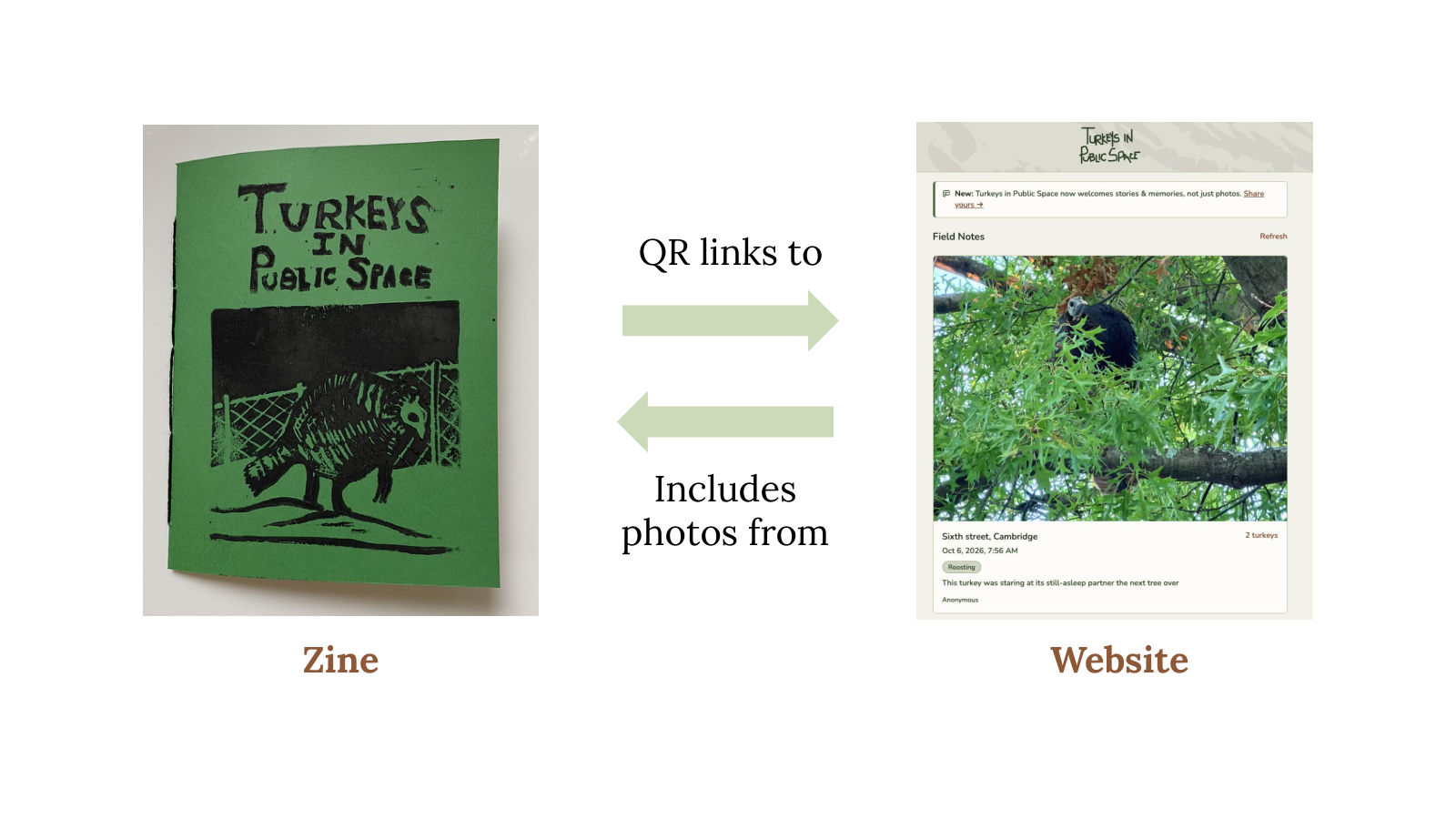
The project involves both a handmade photo zine and a website where people can share their own turkey photos. Here is what the site looks like:

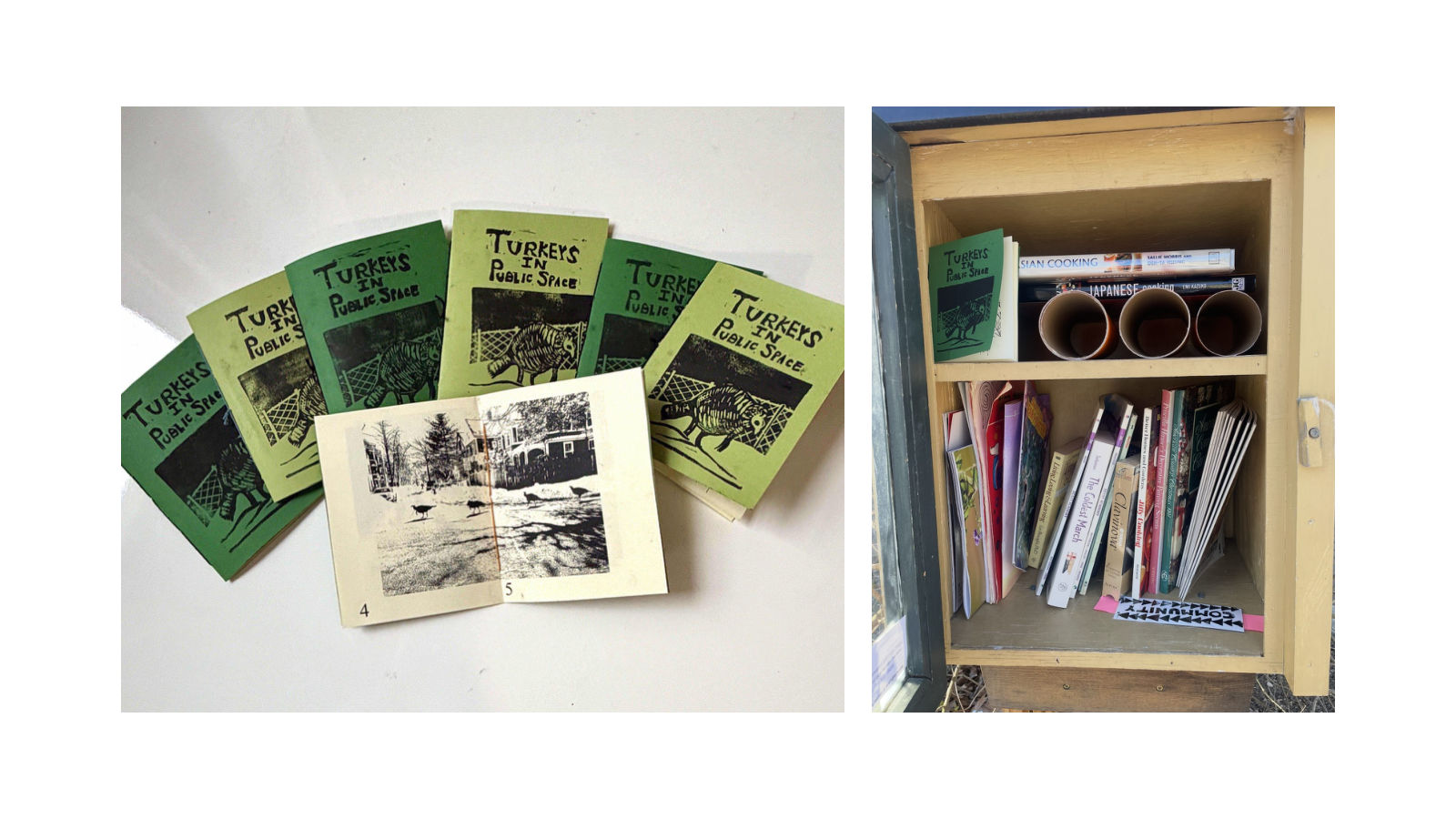
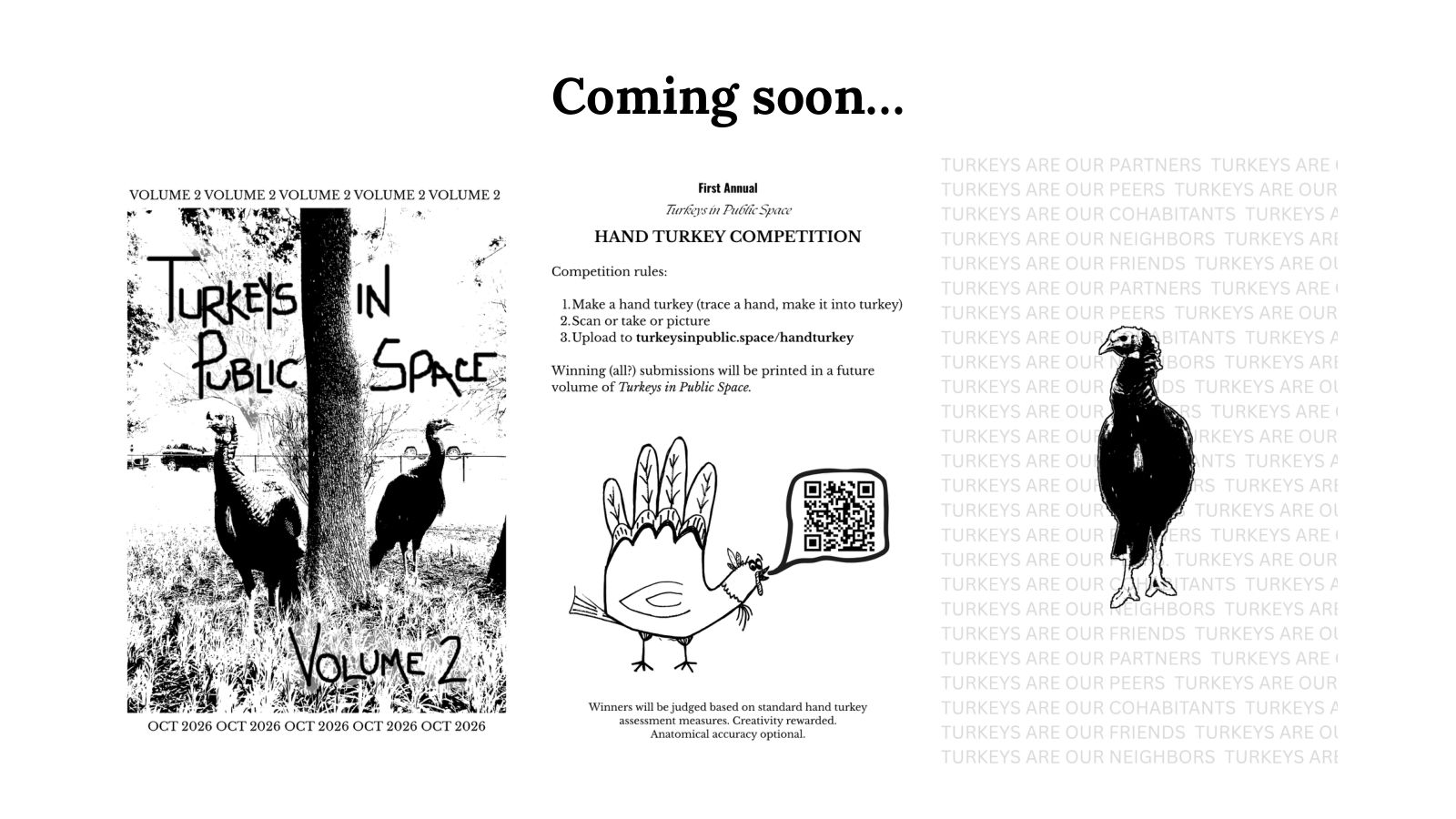
Here is what the first edition of the zine looks like:

The idea is that if people upload their own turkey sightings to the site, they could be included in future editions of the zine.
There is a bit more about the project here; there, we write the following about the project:
Turkeys in Public Space is a community project documenting the wild turkeys of Cambridge and Boston, MA.
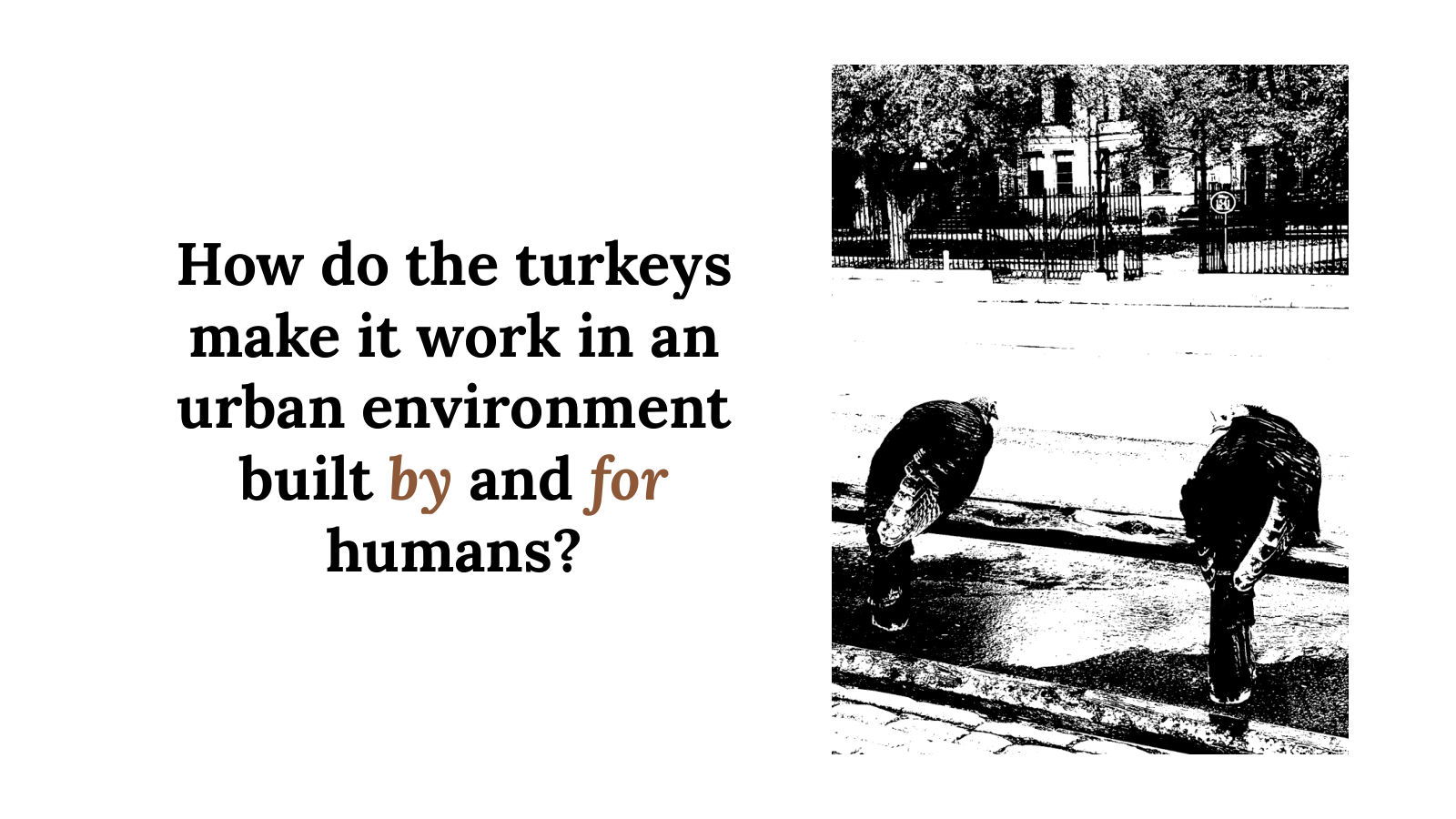
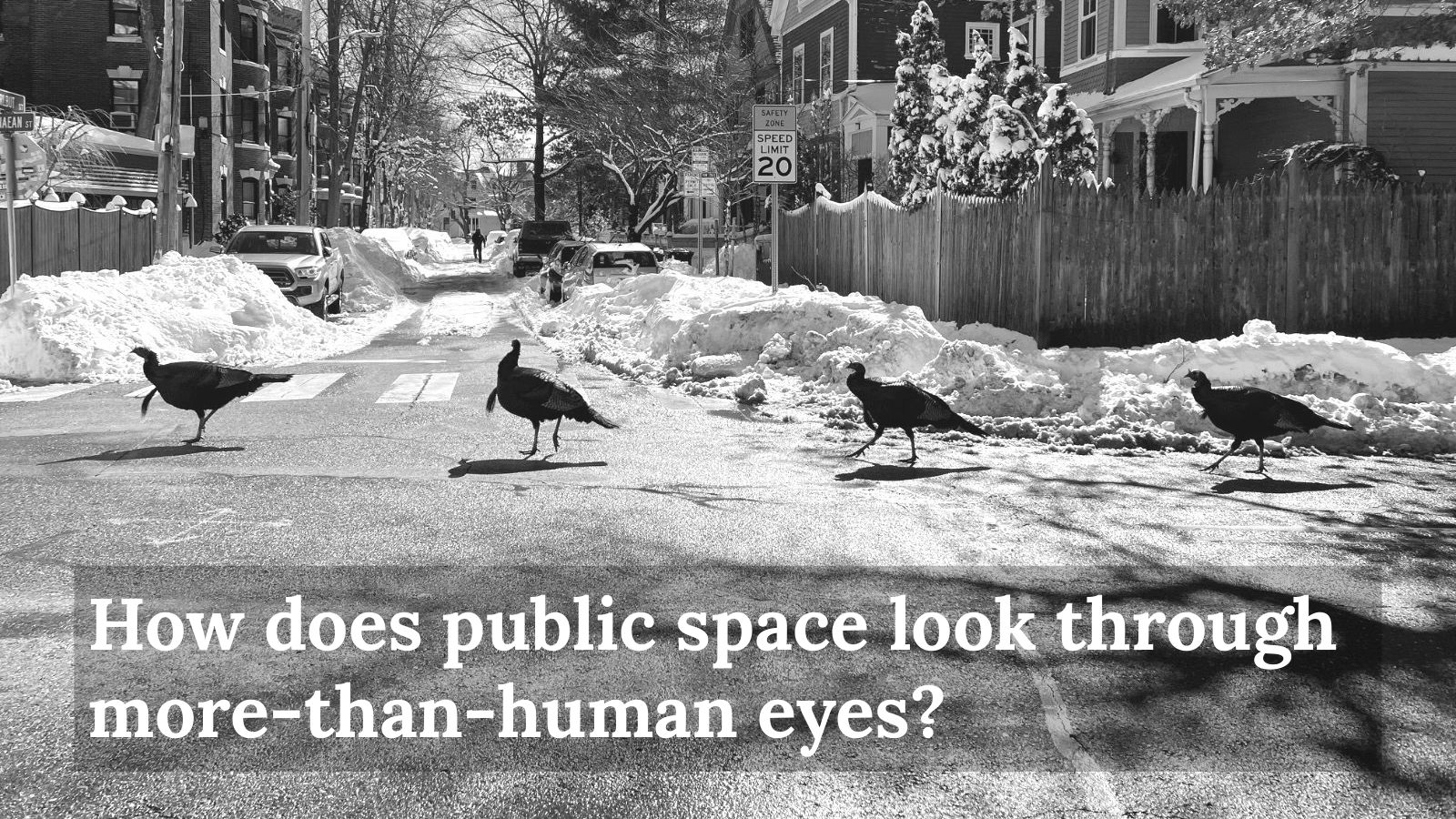
Cities — and their roads, parks, and sidewalks — are designed by humans for humans. But we share these spaces with other non-human plants and animals, often without noticing. Wild turkeys are a vivid reminder of that: conspicuous and willing to occupy spaces that were not designed for them, whether on the road, in the park, or strolling down the sidewalk.
This project is a small way to draw attention to these non-human stakeholders in our public spaces.
Anyhow, the zines include a QR code which links to the website. So the idea is to start placing the zines around town and then we will see if anyone wants to contribute.
September 2026 Update
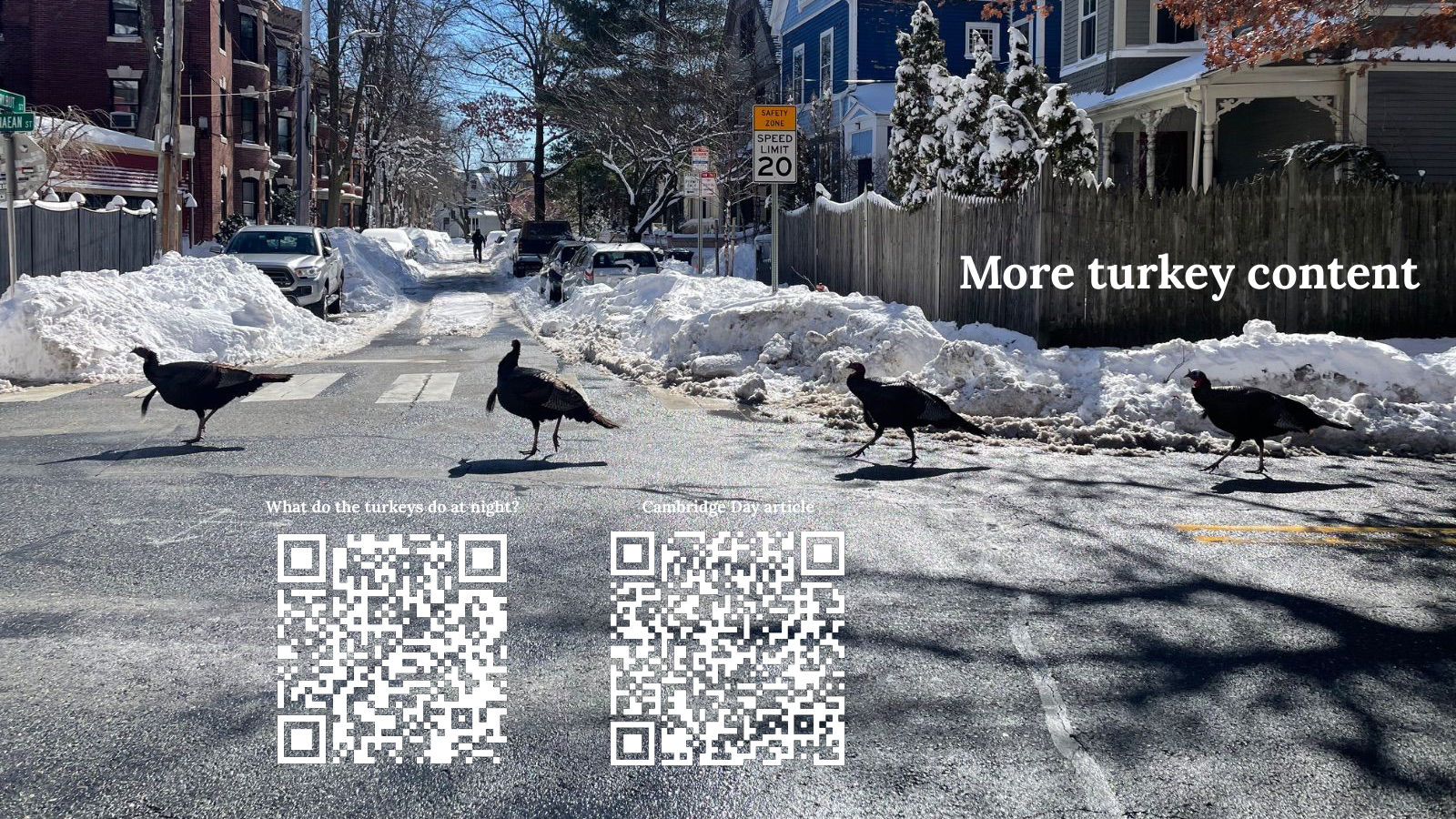
Turkeys in Public Space was covered in Cambridge Day and also in a short spot on WBZ Radio, which was cool.
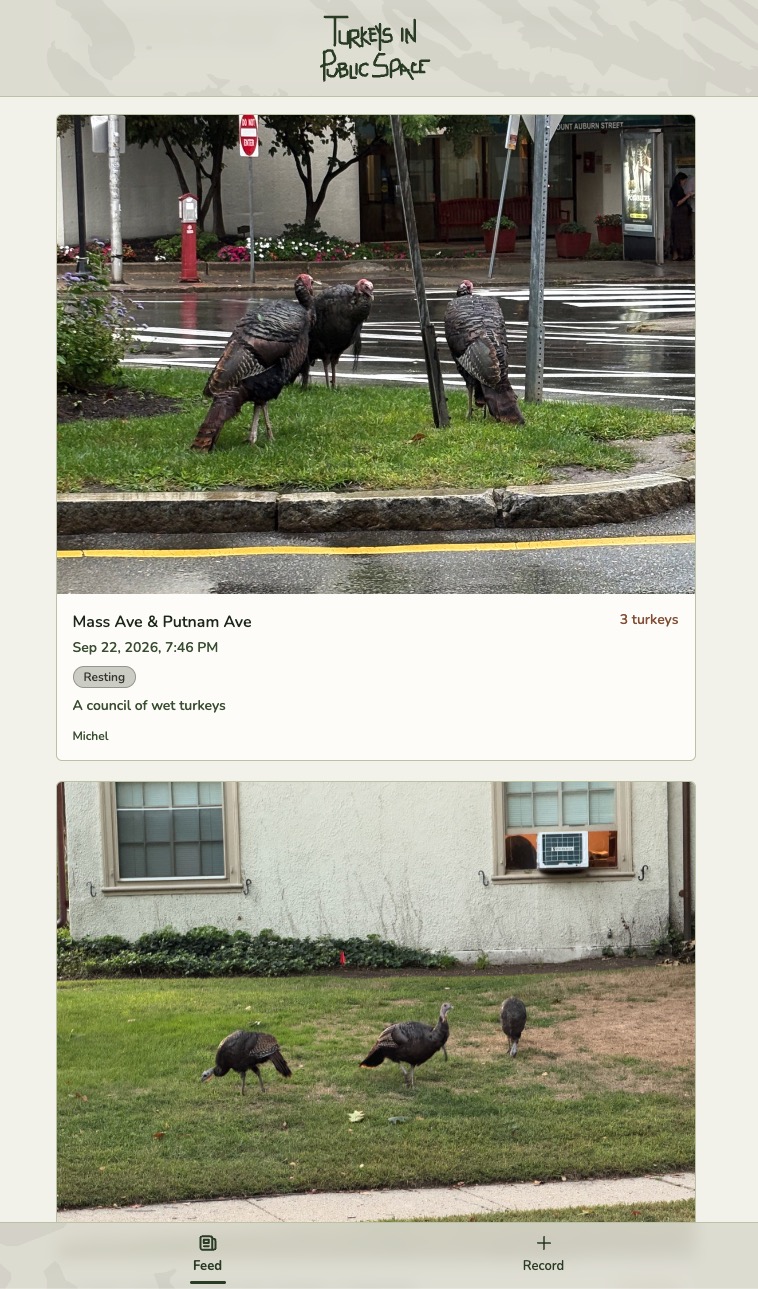
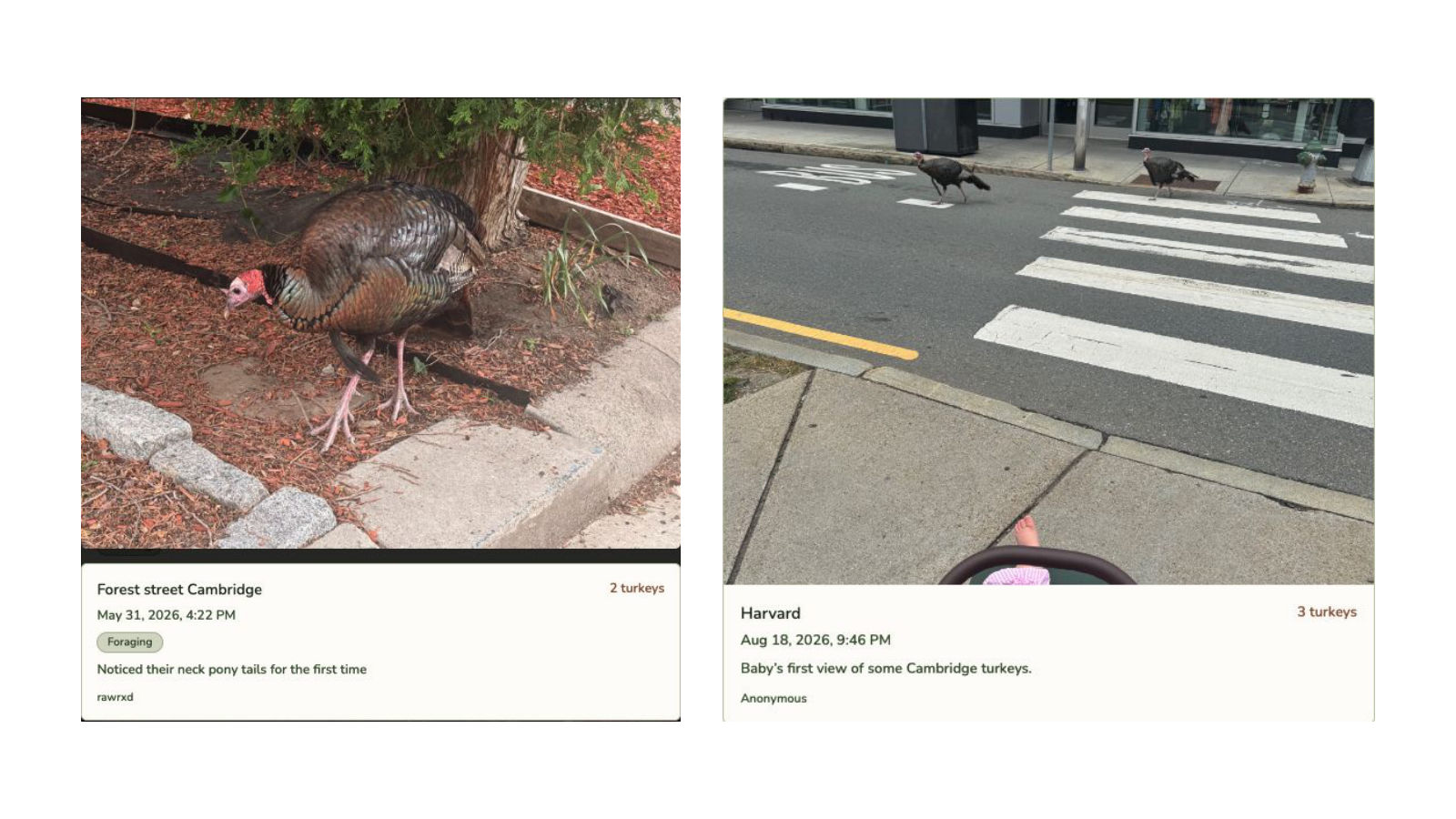
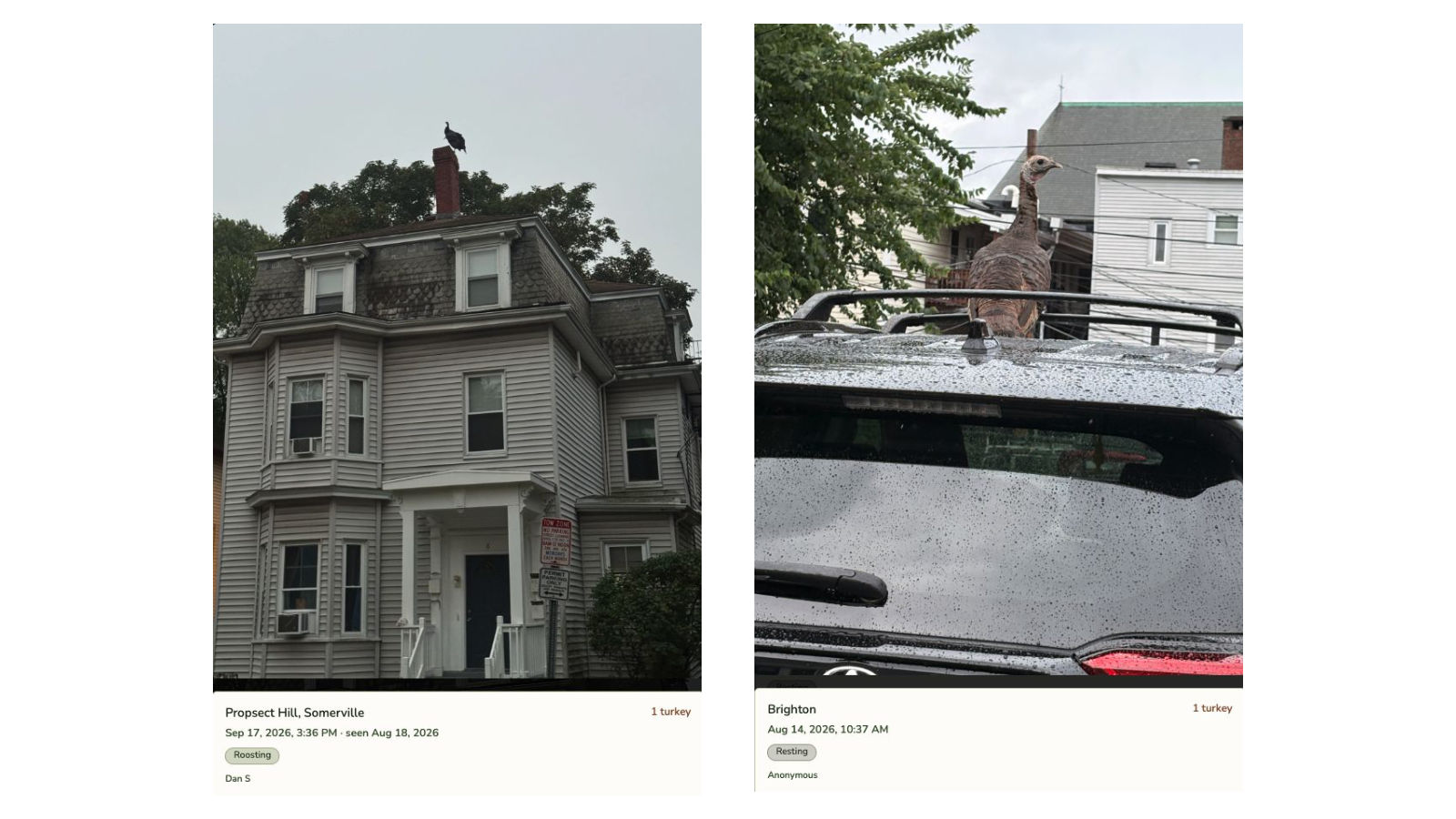
Separately, I worked on a few design changes for the website, which now looks like this:
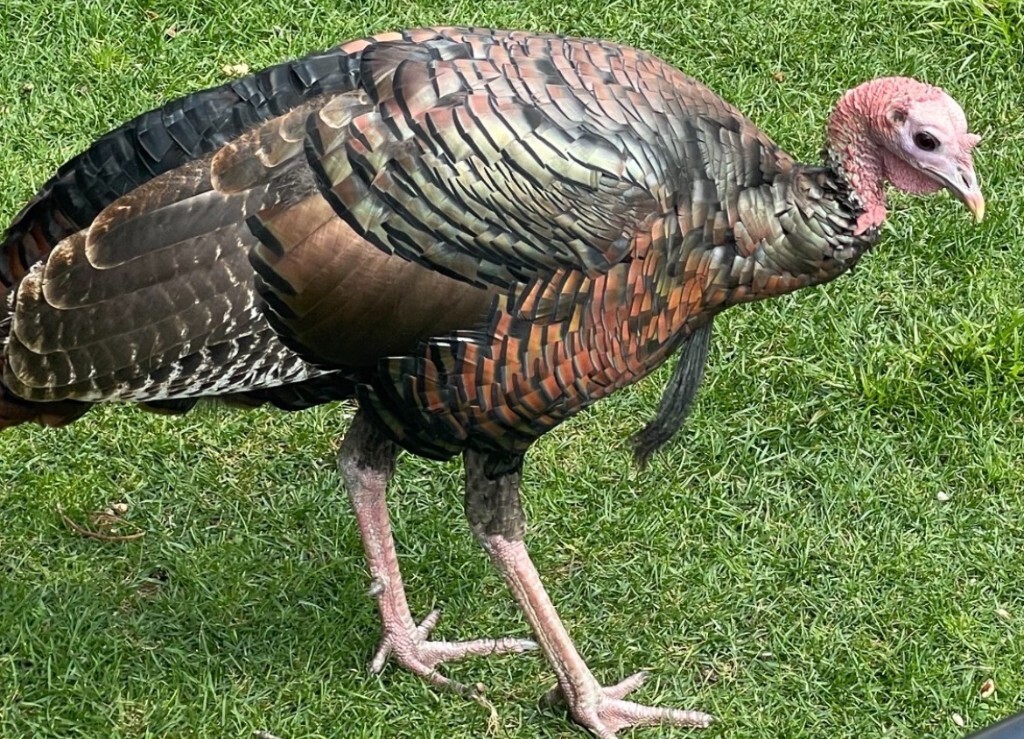
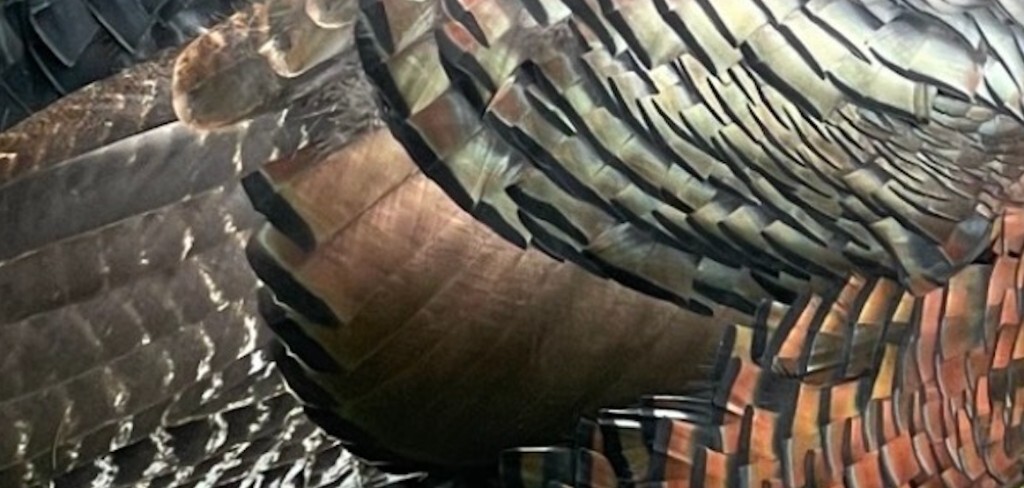
The updated color palette was based on a photo of an iridescent turkey, bringing in more of the copper kind of color. The background textures in the header and footer are extracted from the feather pattern of a turkey in the same photo:
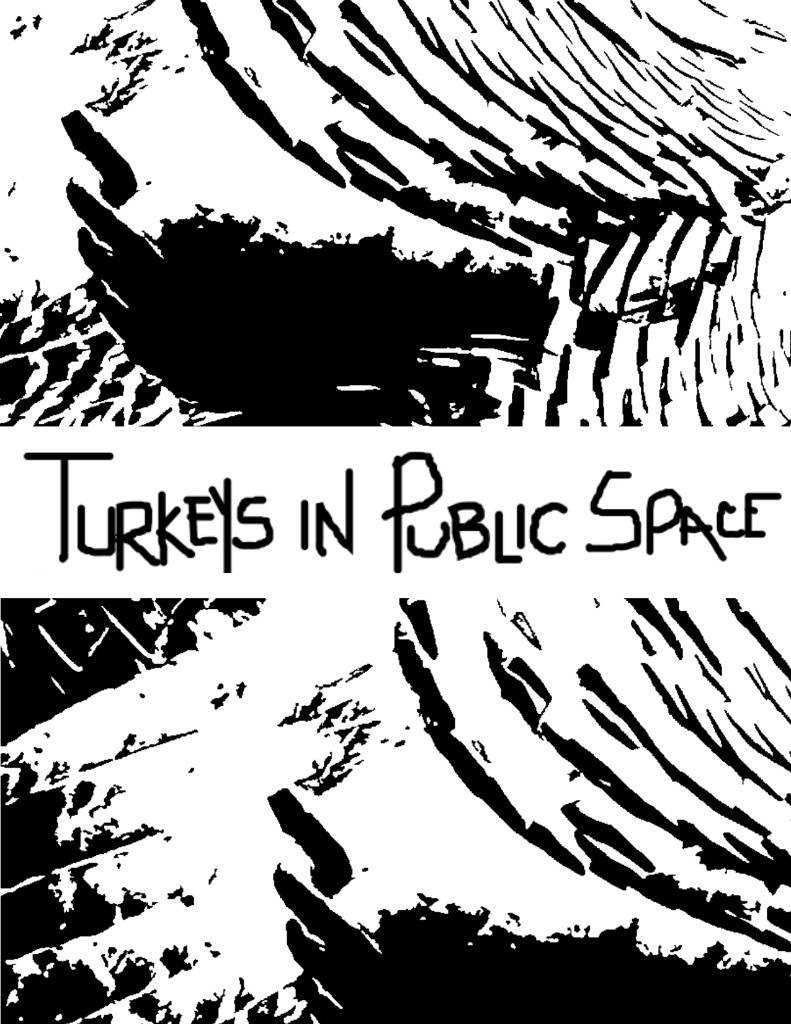
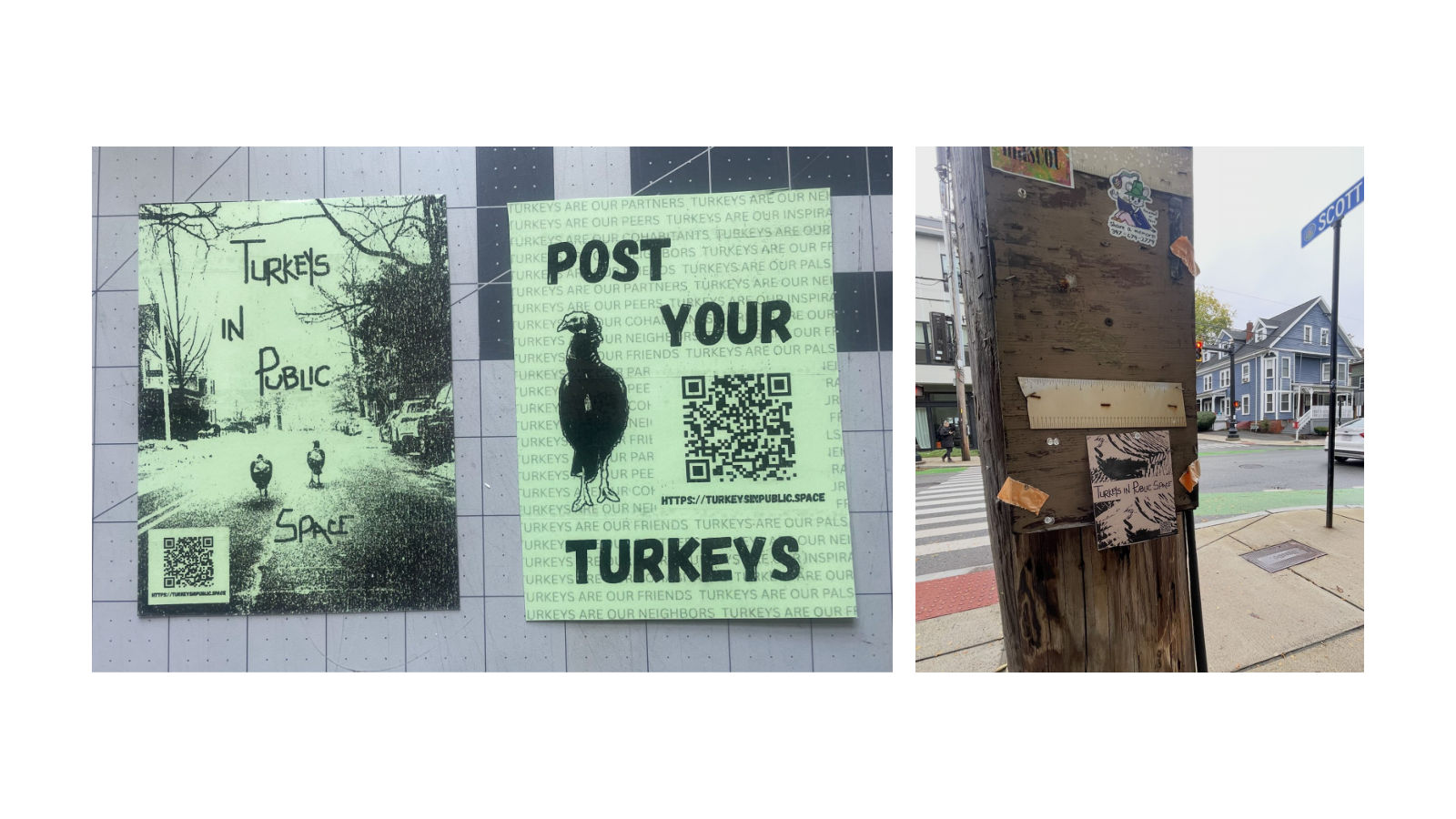
I’ve been creating a handful of different flyers. I mix and match the fronts and backs a bit at random and share them around town as opportunities present. Here’s a few of the designs:
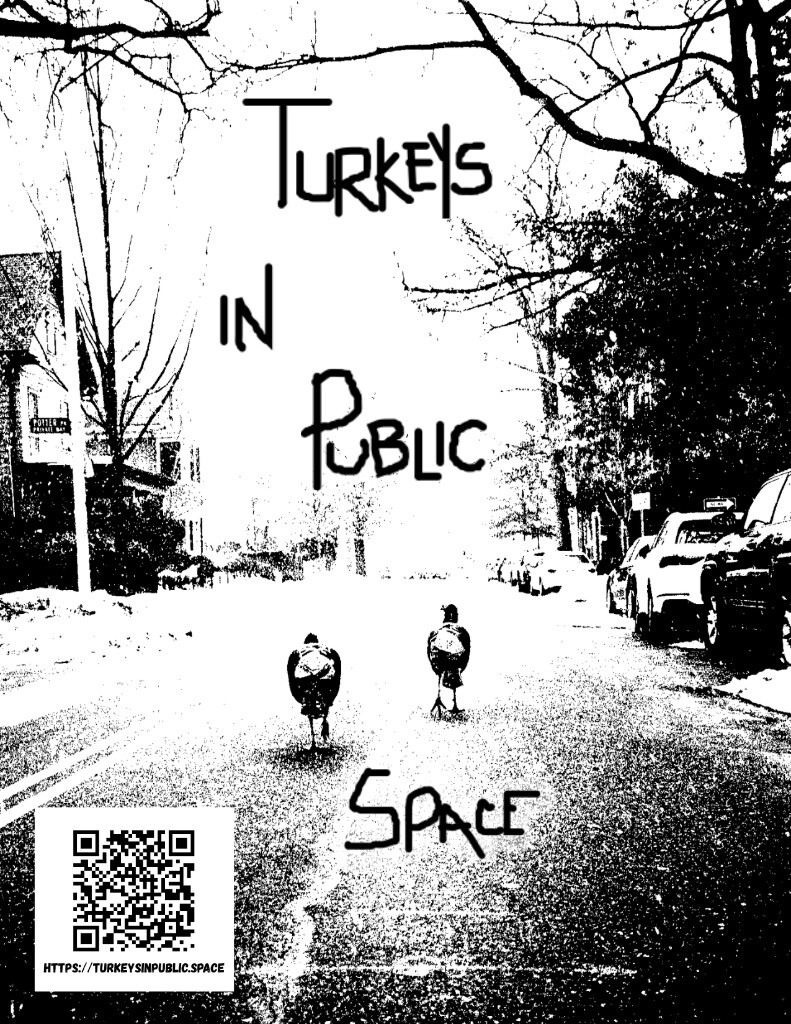
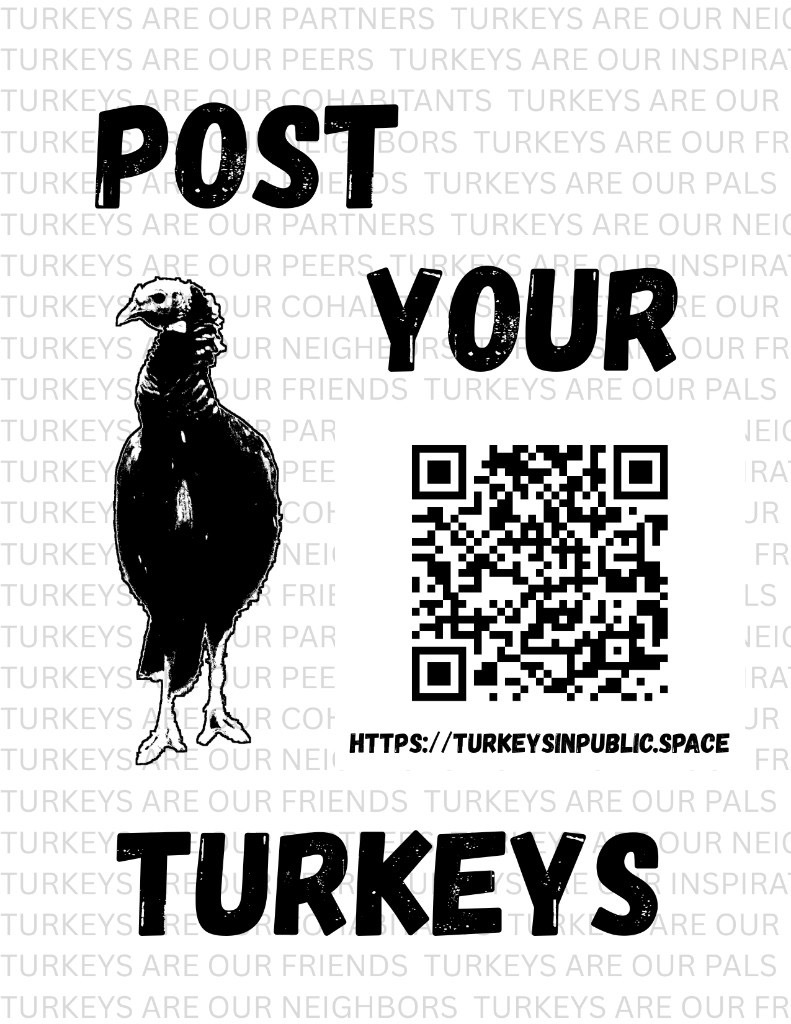
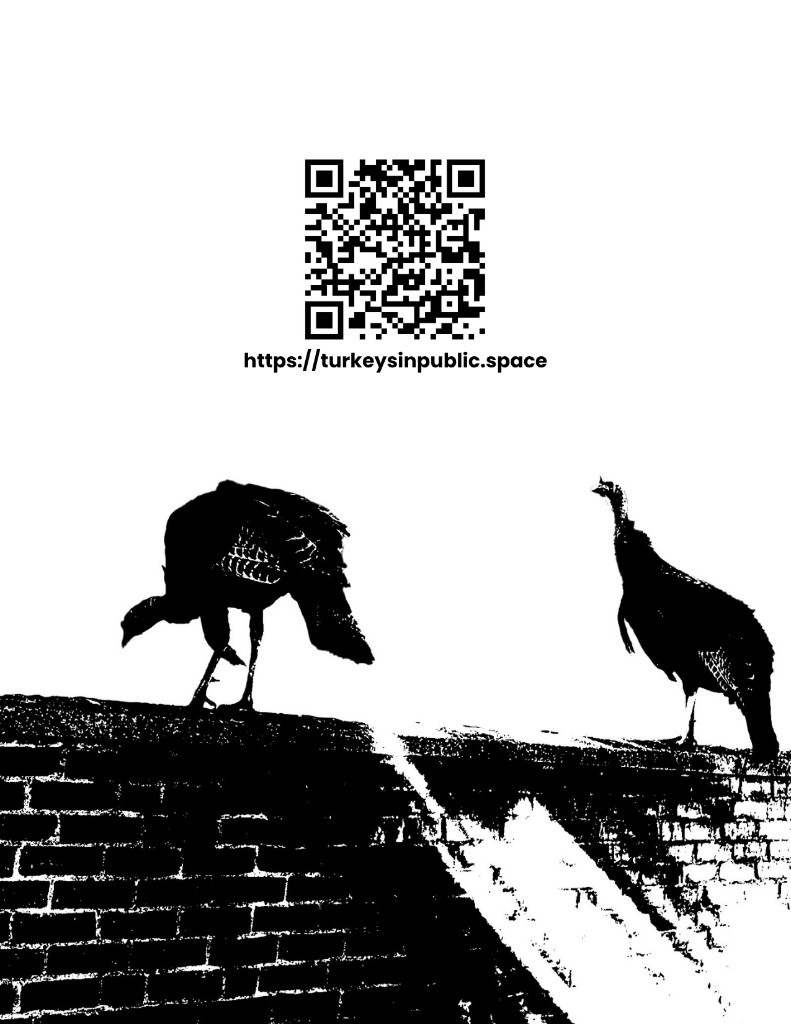
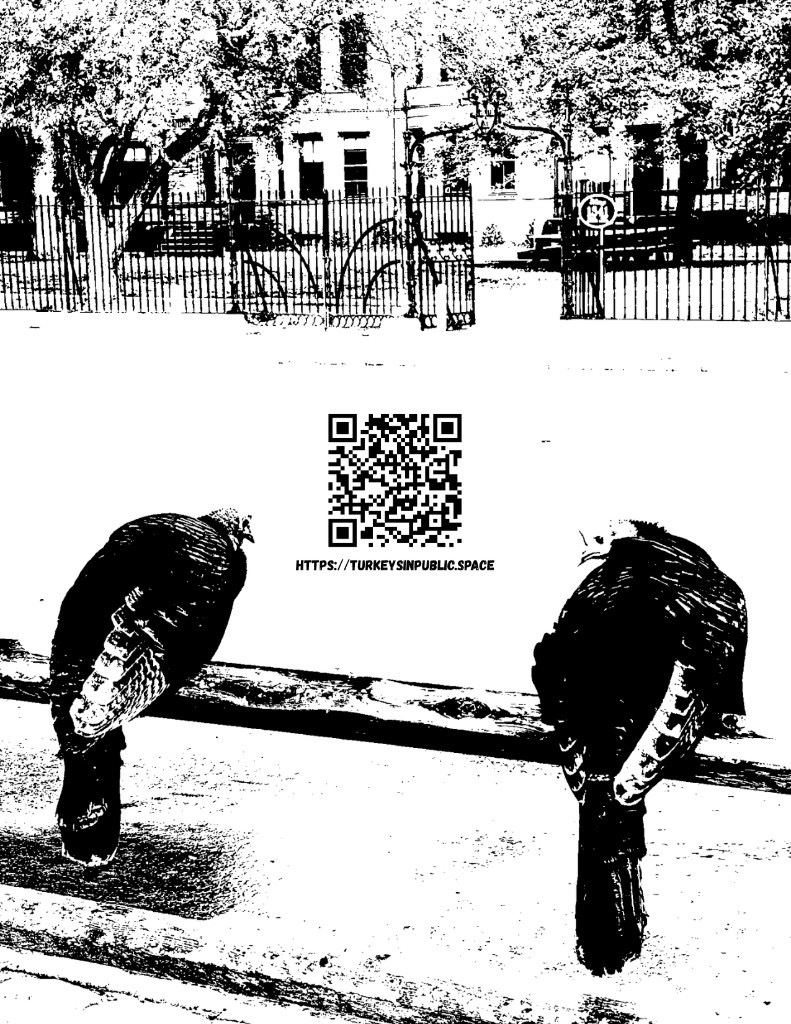
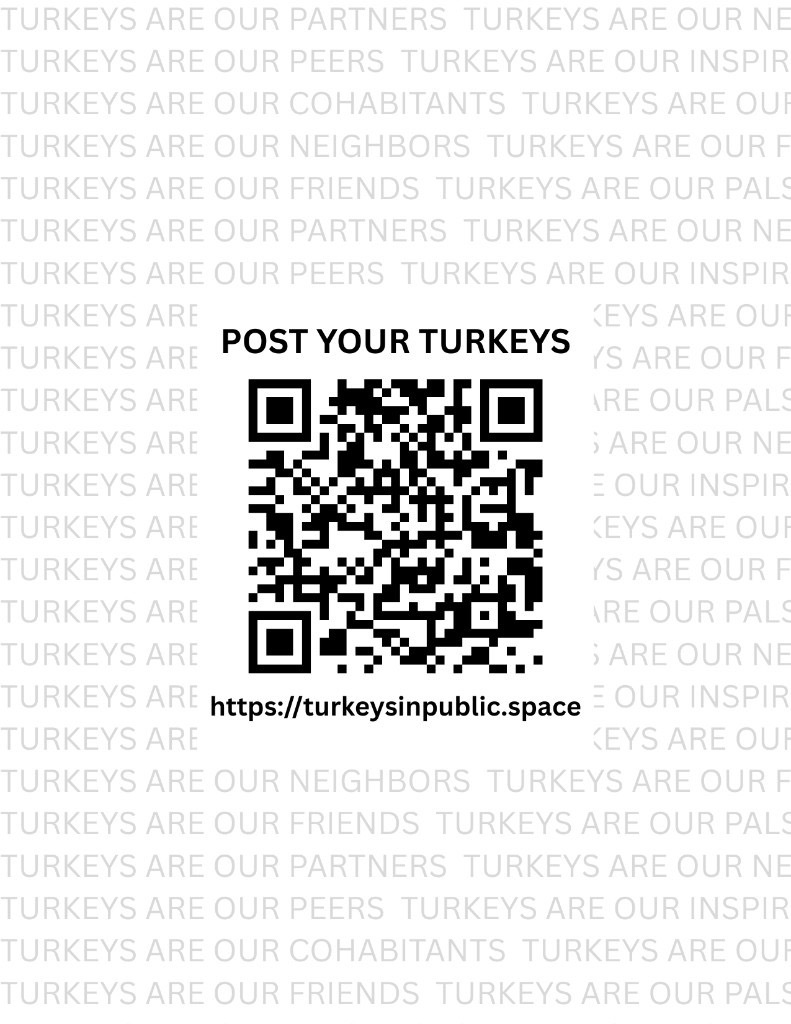
Finally, we are working on the second edition of the zine. Hopefully we can get it out in October sometime.
October 2026
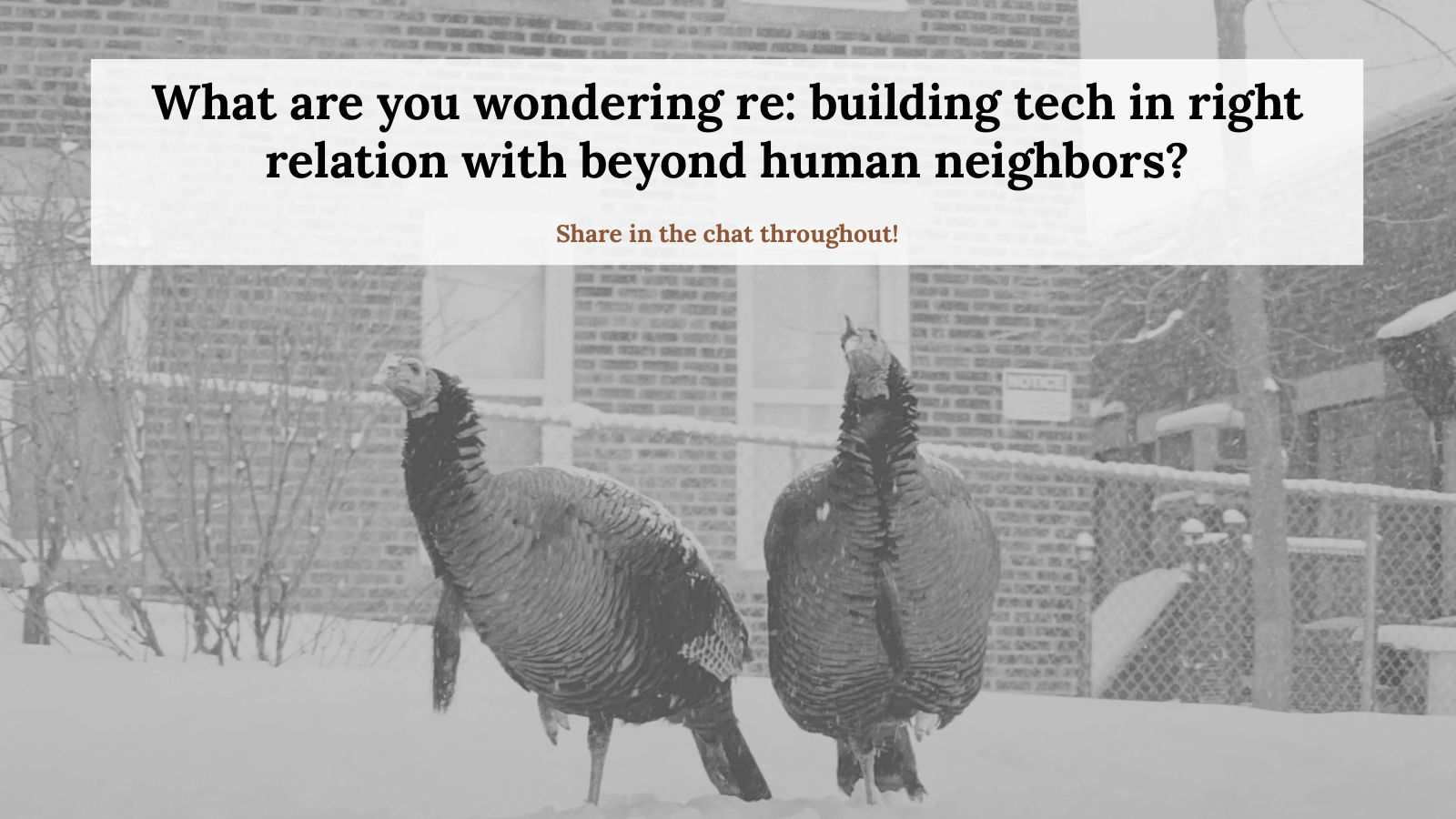
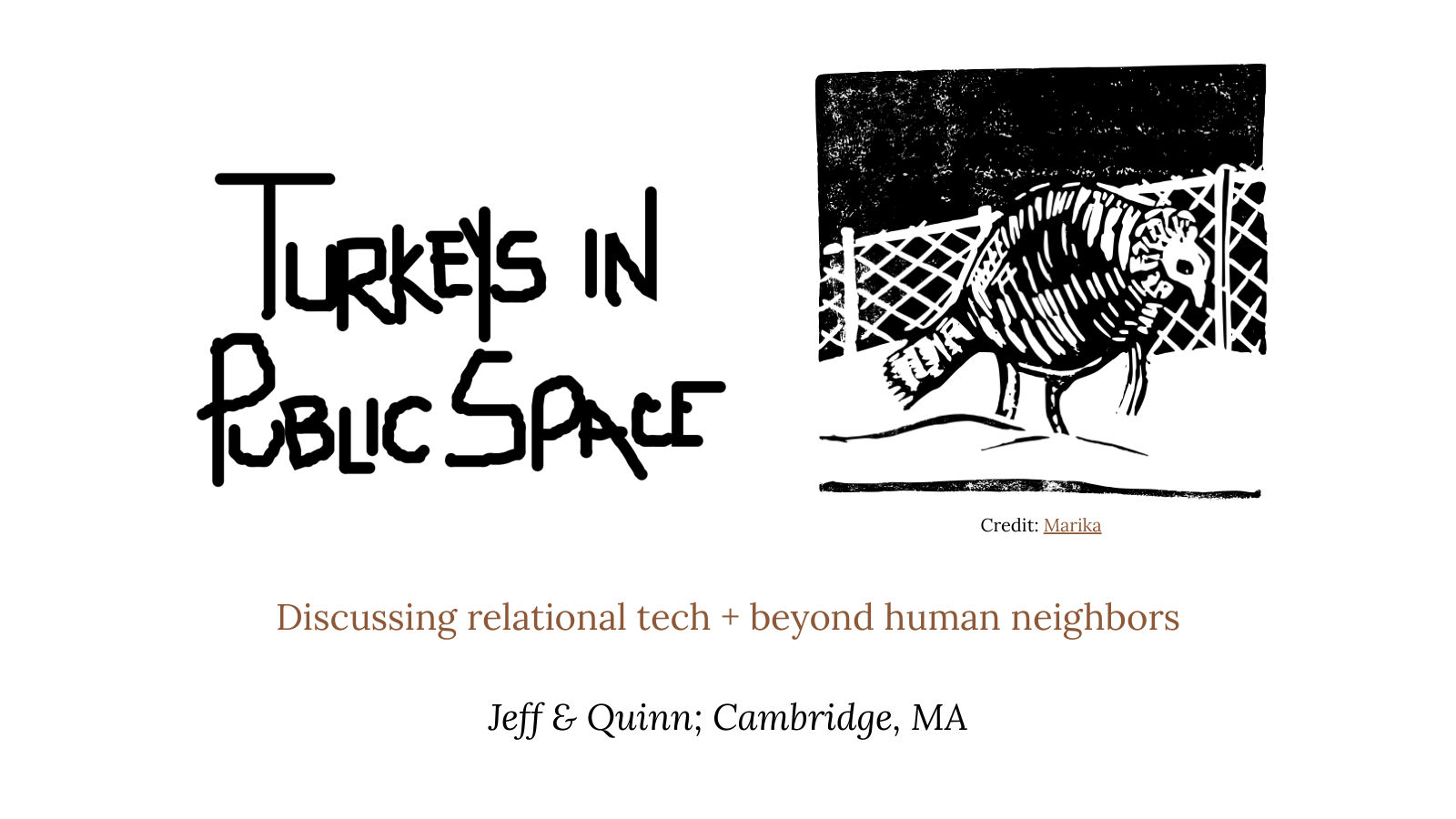
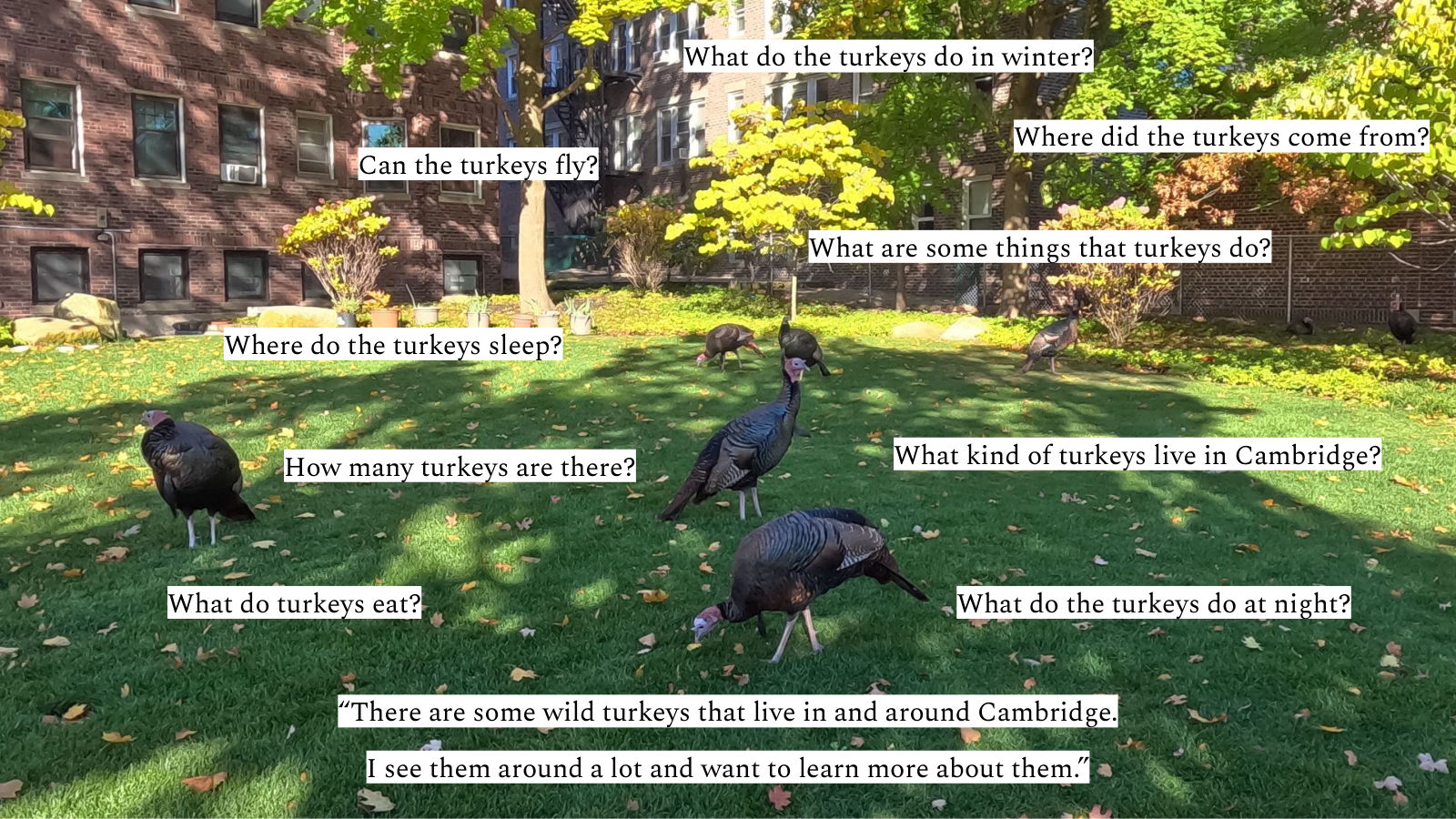
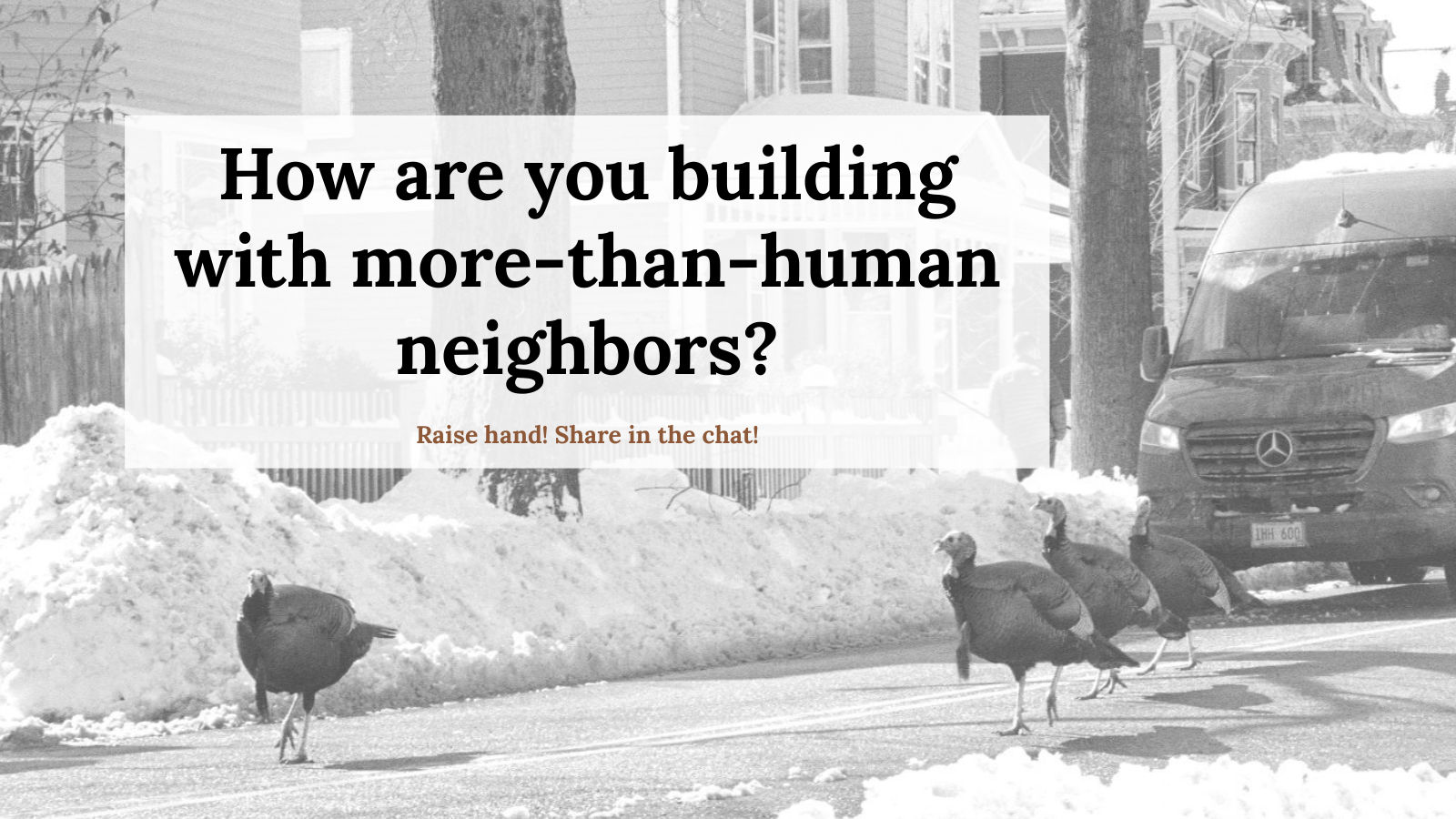
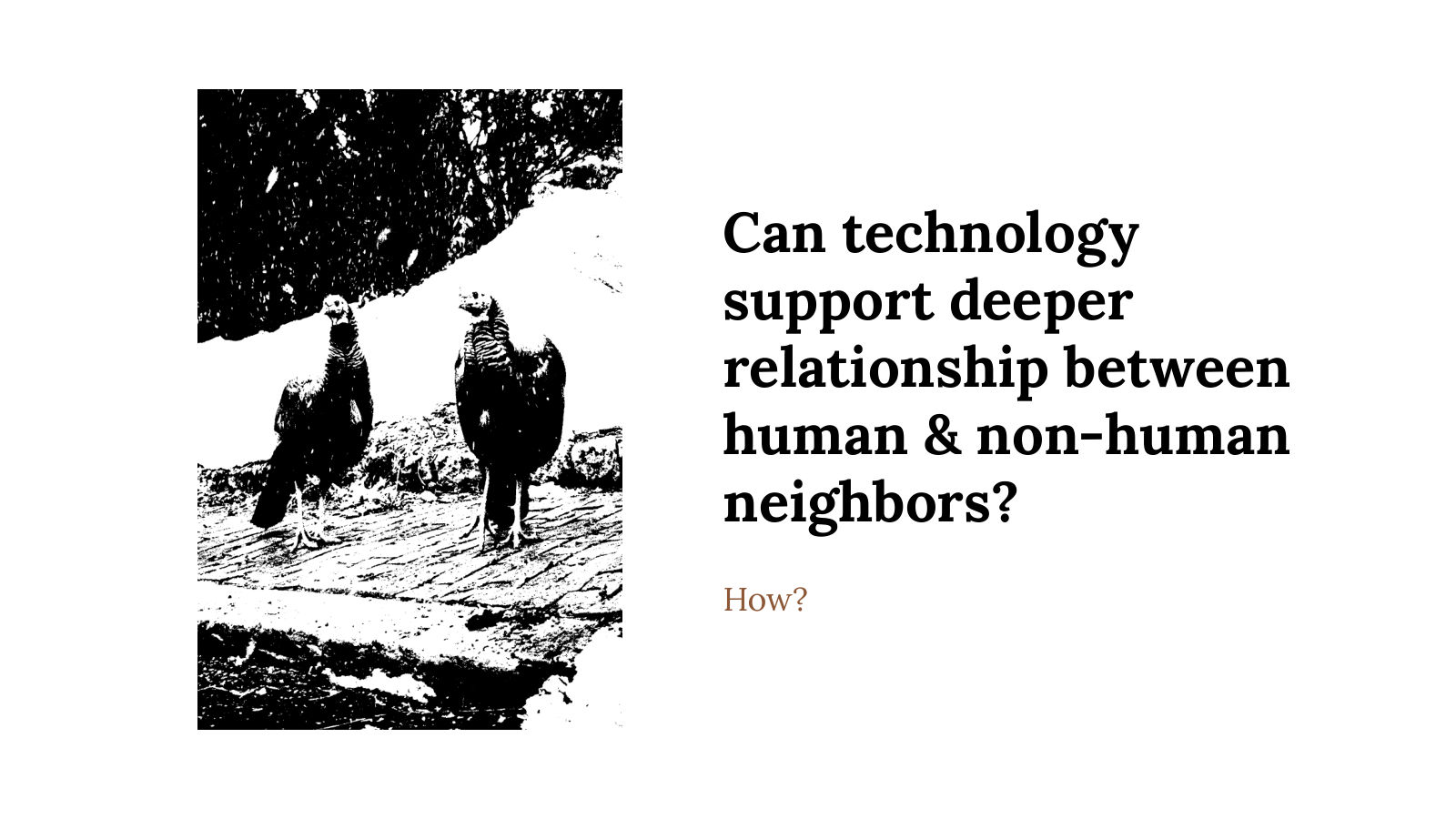
With the Relational Tech Project, I presented about Turkeys in Public Space as part of a jam on the broader theme of relational technology and beyond human actors.
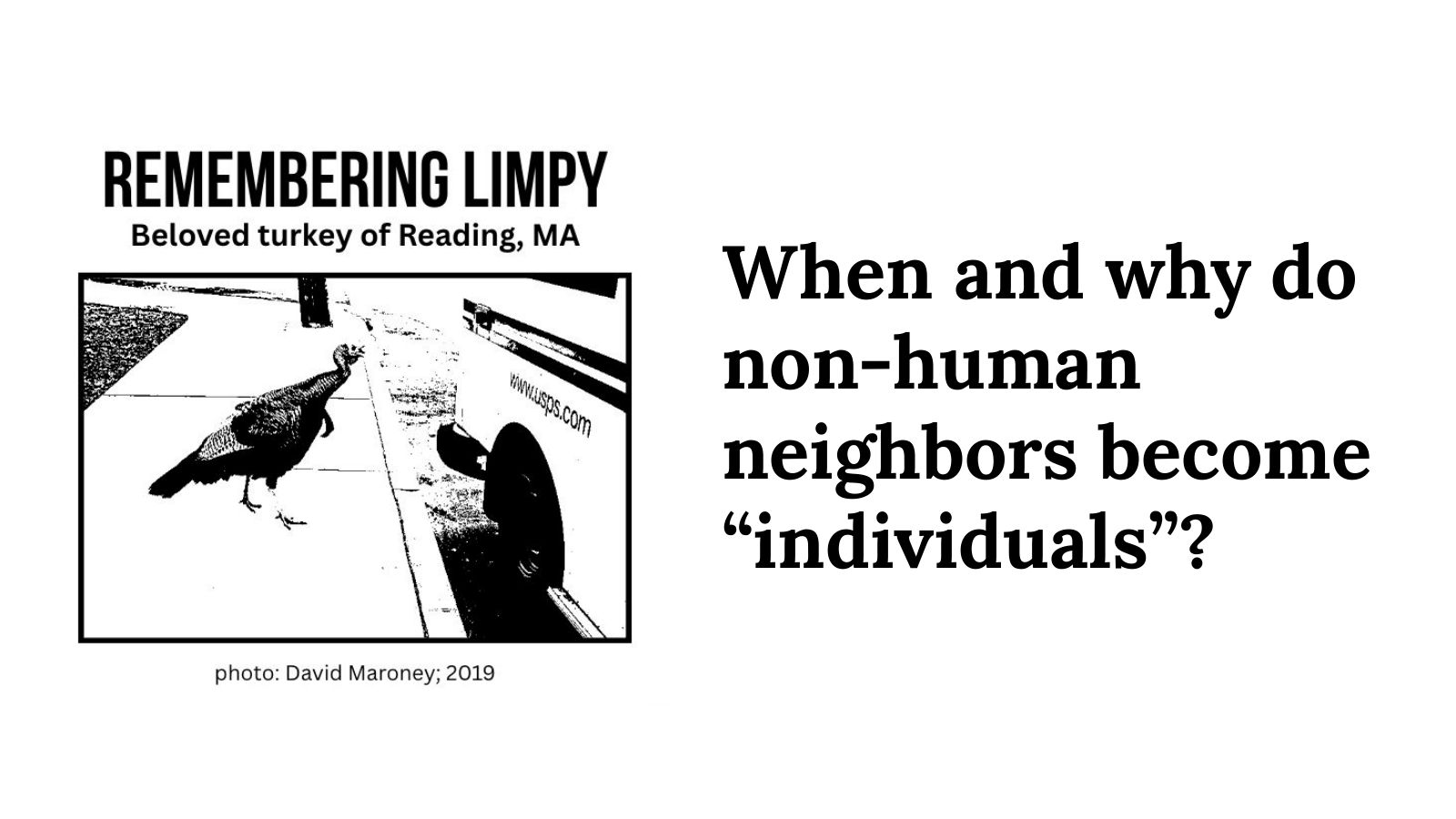
My slides from the presentation are here (PDF). You can also flip through them below:

Some themes / ideas that I take away from the conversation:
-
Jer Thorp’s work on bird and data things came up, which I’d like to investigate more; idea that bird observation data sets are about humans (and the places/times/ways that they encounter birds) as much as they are about birds themselves. I wonder if there are directions to disentangle this more?
-
We talked a lot about how to deepen the bidirectional relational aspects of the project; a theme here was wondering about how to engage the reciprocal aspects of the turkey-human encounter; as much as the human is encountering / witnessing the bird, so too is the bird witnessing / encountering the human. Could the tool center this reciprocality more? E. brought up the app BeReal as analogy, with its simultaneous front- and rear-facing photo, displaying both what’s witnessed and who is doing the witnessing at the same time.
-
Where does “expertise” fit in? There were questions about “how do we be sure” that we are doing right by animals, improving welfare, and the risks of harm even when we mean well. For me this raises questions about who gets to be the arbiter of harm and welfare and on what terms? There are a lot of STS themes here.
-
There was discussion about representing “care” in the relationship / encounter between human and turkey. The tool currently tends in the direction of suggesting more “objective”, “scientific” sorts of observations. Could it encourage observers to engage more of the emotional or “subjective” aspects of the encounter? How do you feel after this interaction? What did it remind you of? Etc.
- I was reminded of this note I wrote a while ago also about “science” as a practice of care. In general, I am sympathetic to a lot of critical perspectives about scientific ways of knowing, “objectivity” etc. and the way they try to strip away important (including relational?) aspects of the world. Yet also interested in observation, including “scientific” practices like counting, or measuring, or documenting as modes of practicing care, paying attention to something closely.
- Concretely, I think it could be fun to add an optional field to the site asking something like “how do you feel after this turkey encounter?”, inviting an emotion word.