Plants and Boundaries
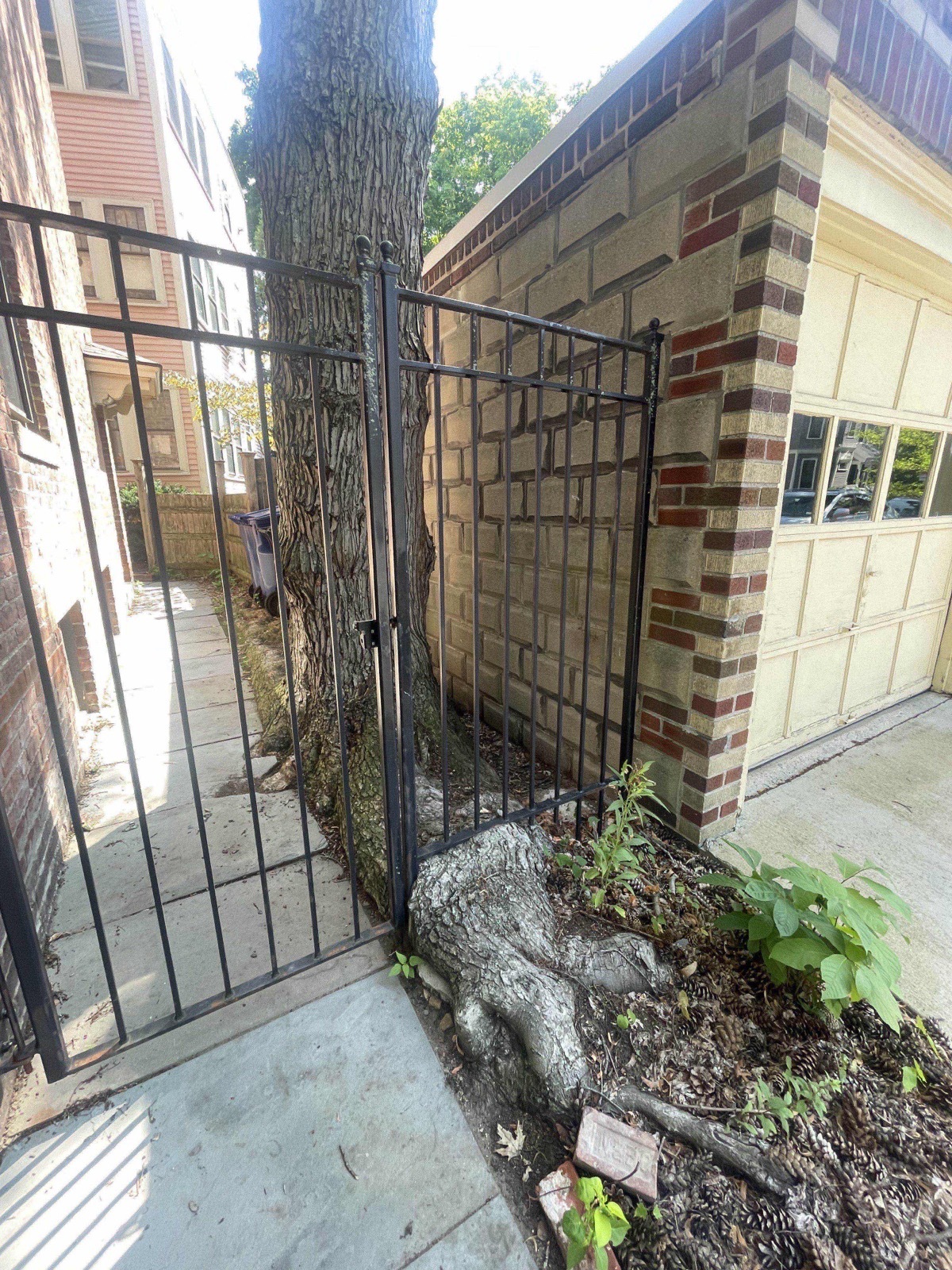
I made a note a while ago about the theme of plants and boundaries. The note was first inspired by this image from around Cambridge:
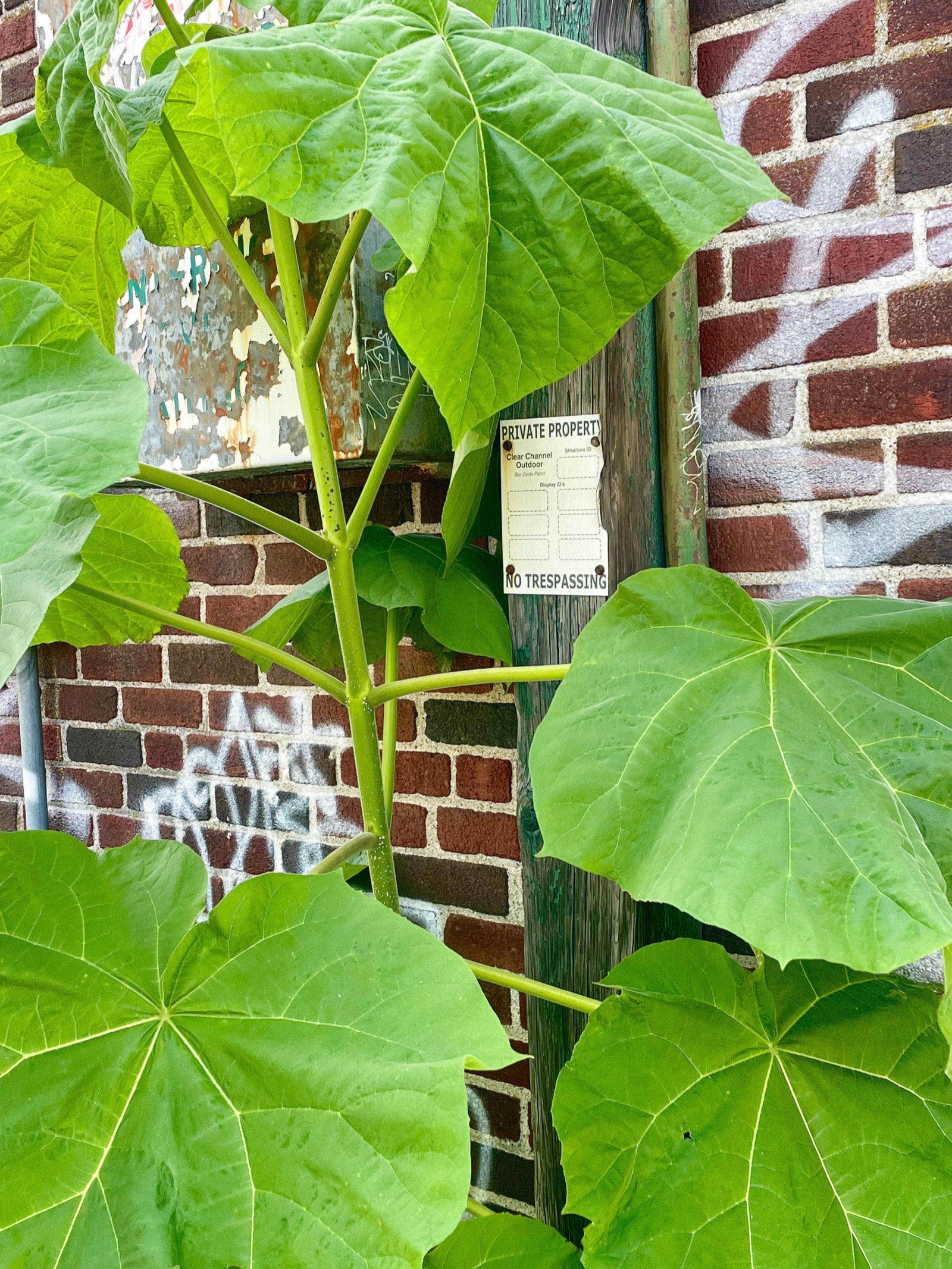
According to iNaturalist, this is likely a Paulownia tree (specifically, Paulownia tomentosa), a species that is considered “invasive” in the US, at least by some.
This page explains more of its “invasive” characteristics:
Paulownia tormentosa is an aggressive and highly adaptable ornamental tree that grows rapidly. Also, its ability to sprout prolifically from adventitious buds on stems and roots allows it to survive fire, cutting and even bulldozing in construction areas; making it difficult to remove from established areas.
I was curious about the term “adventitious bud” – essentially a bud that shows up in a non-standard or unusual place. Here is another link which explains that “adventitious buds are rogues and outliers”.
It’s amazing all the normativity of boundaries and place, both in the urban landscape and in our understandings of plants and botany: “private property”, “no trespassing”, “invasive”, “adventitious”, “aggressive”. I’ve written about these themes before.
In my initial plants and boundaries reflection, I thought it was interesting to notice how much of city infrastructure is itself about boundary-making. Cars can go here but not there. Stop here, go there. So much of urban politics is about contesting these boundaries; in Boston and Cambridge, for example, there’s lots of debate about the nature and presence of bike lanes – where should they be, and how permeable their boundaries should be (“paint is not infrastructure” per the bike advocates), who should be allowed in them.
Against this background, I think it’s interesting to pay attention to non-human agents like plants. Plants are often expected to inhabit particular spaces in the urban environment – a garden, a median, a planter, a tree well. And yet plants are also not beholden to these boundaries in any deep way. They often transgress, trespass without malice. It’s interesting to notice when and how the urban environment responds to these violations.
Sometimes the boundaries are policed, enforced; but other times, it’s seemingly impossible, or perhaps considered too trivial to be worth the effort.
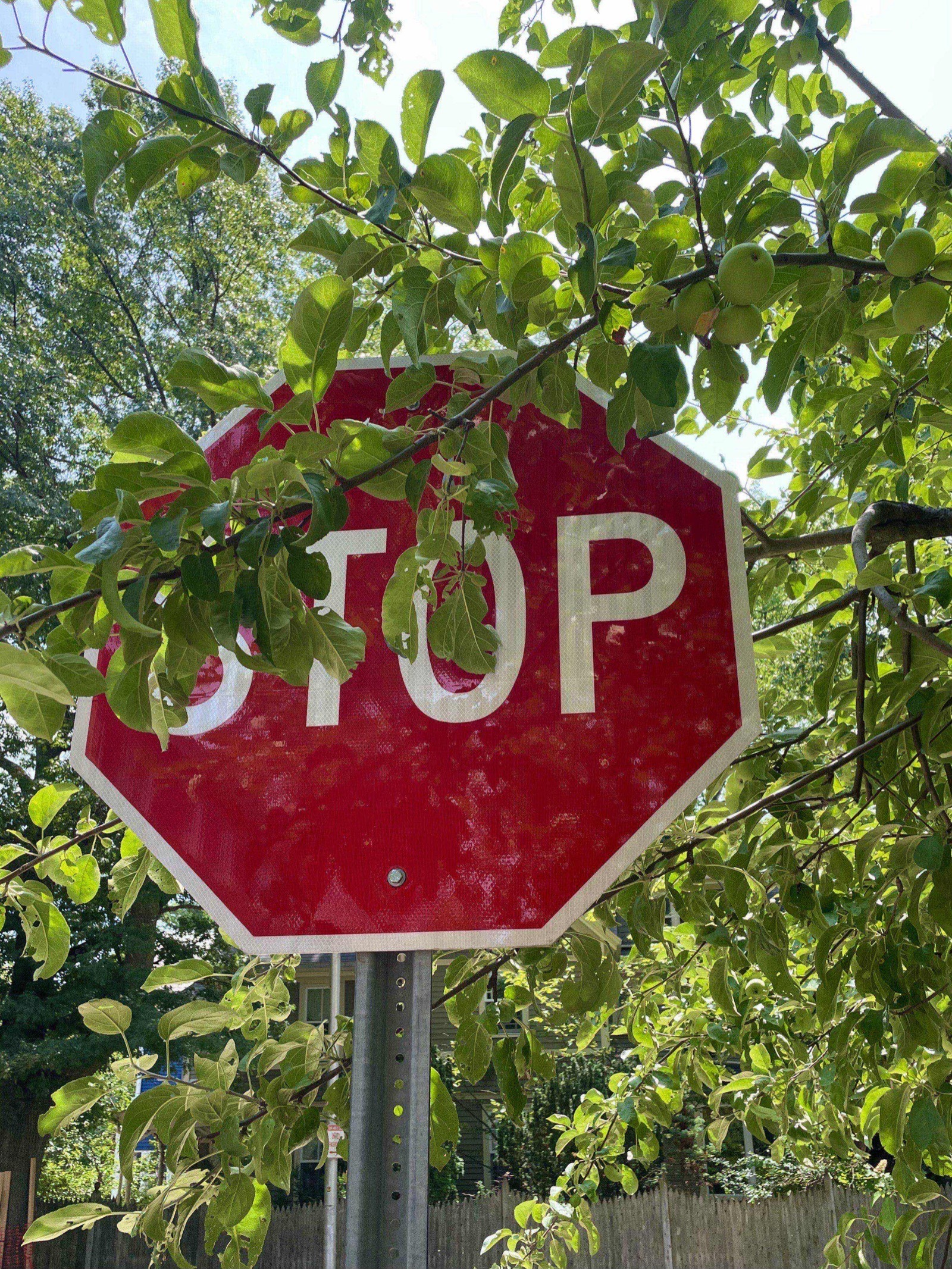
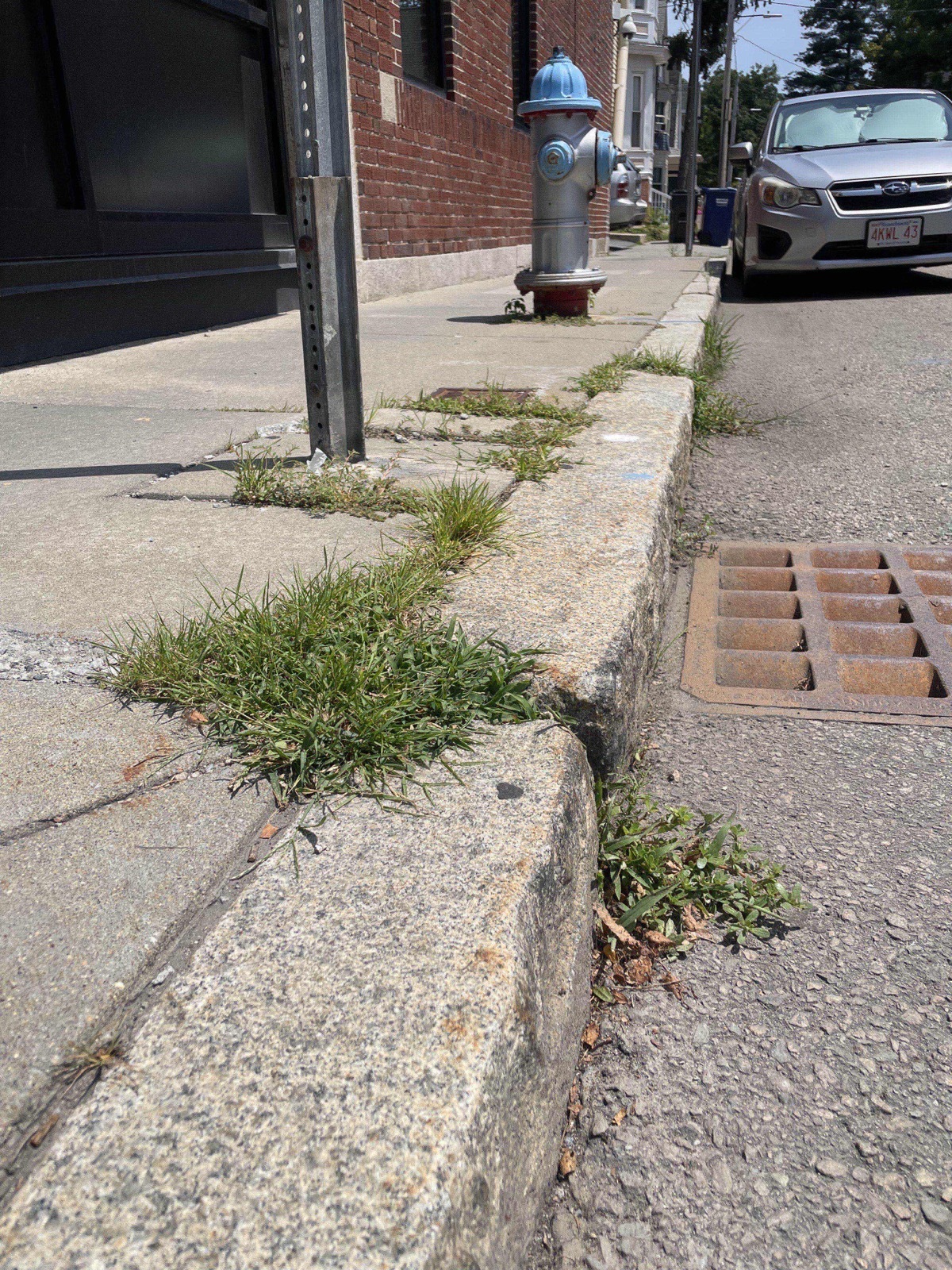
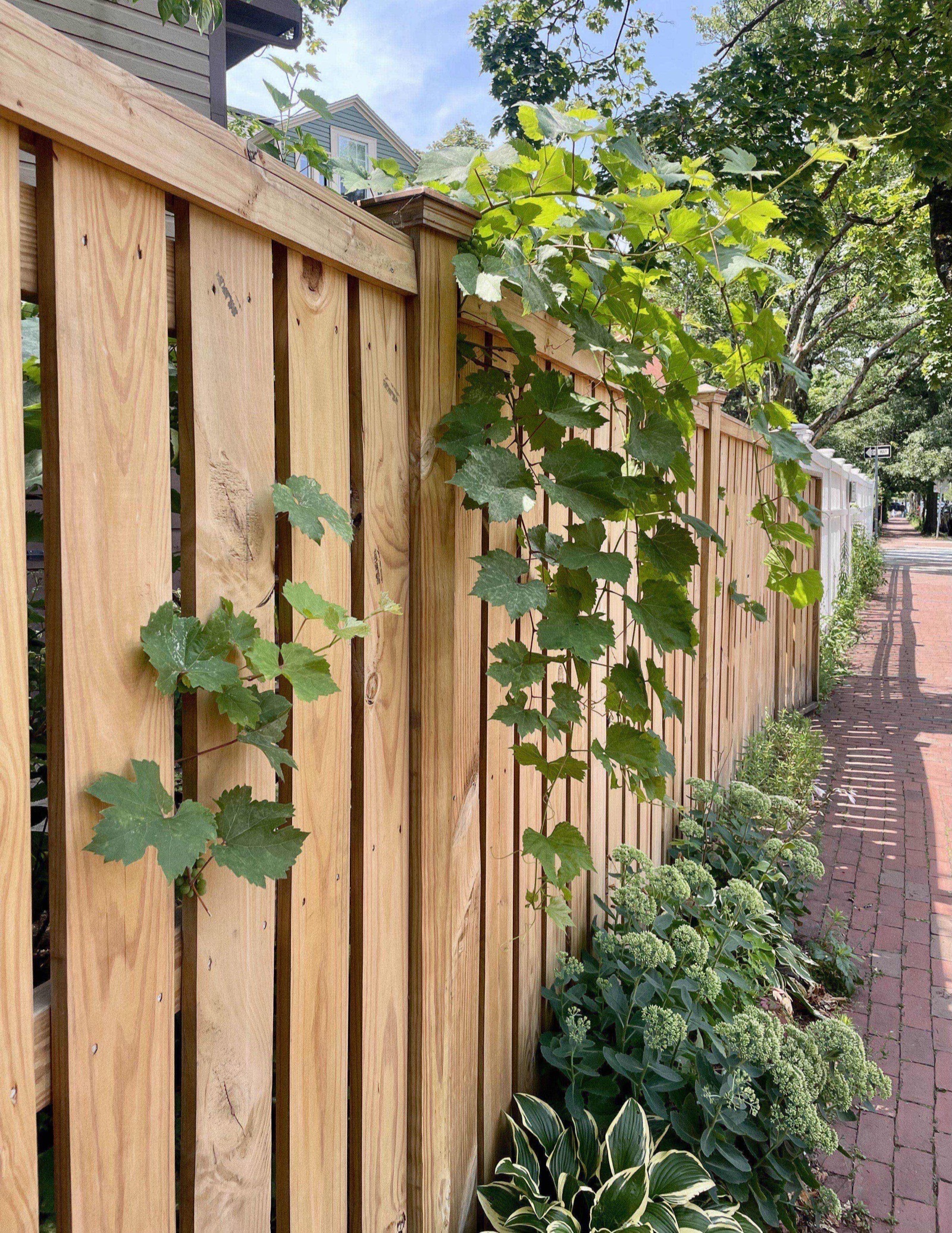
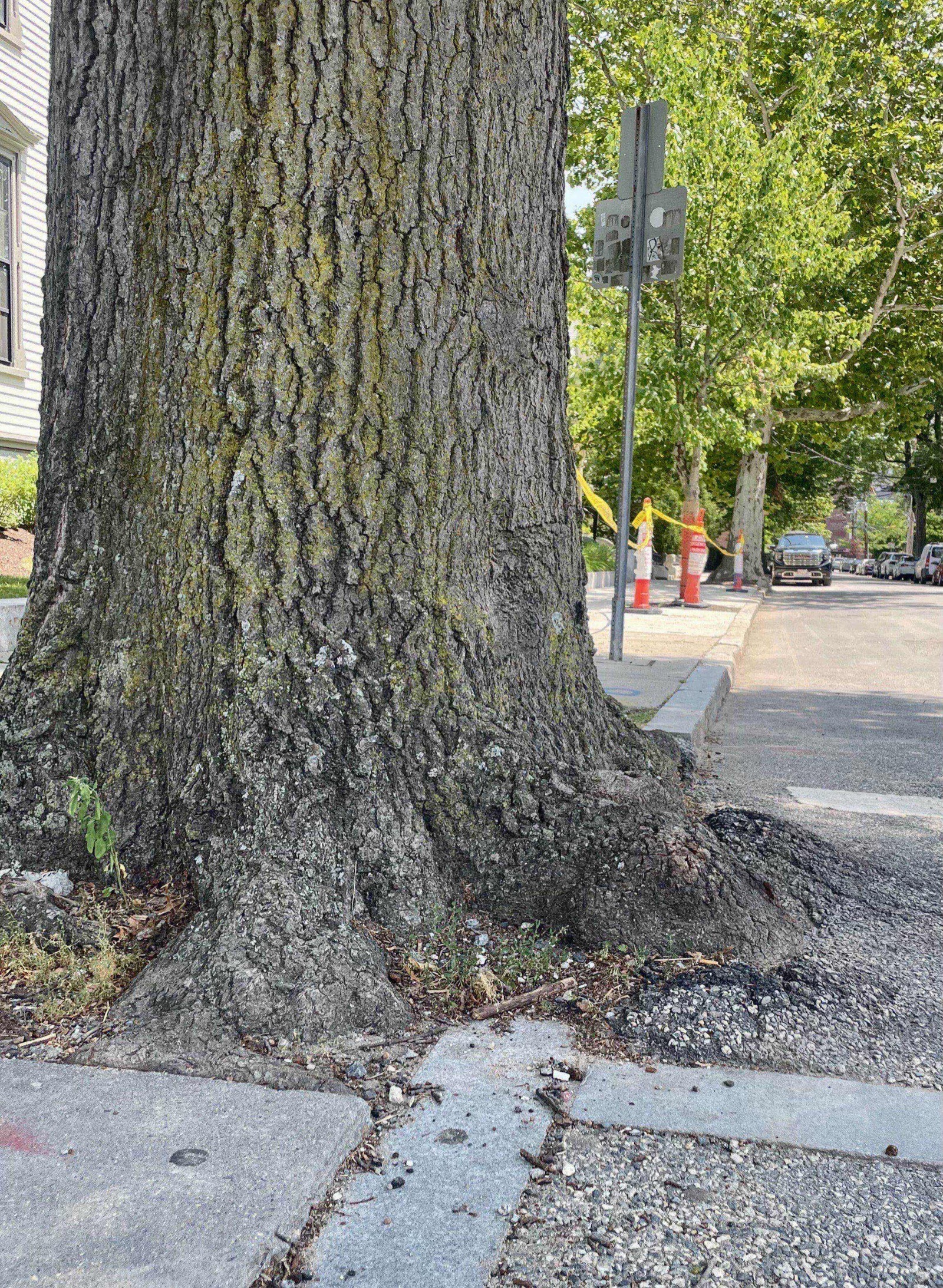
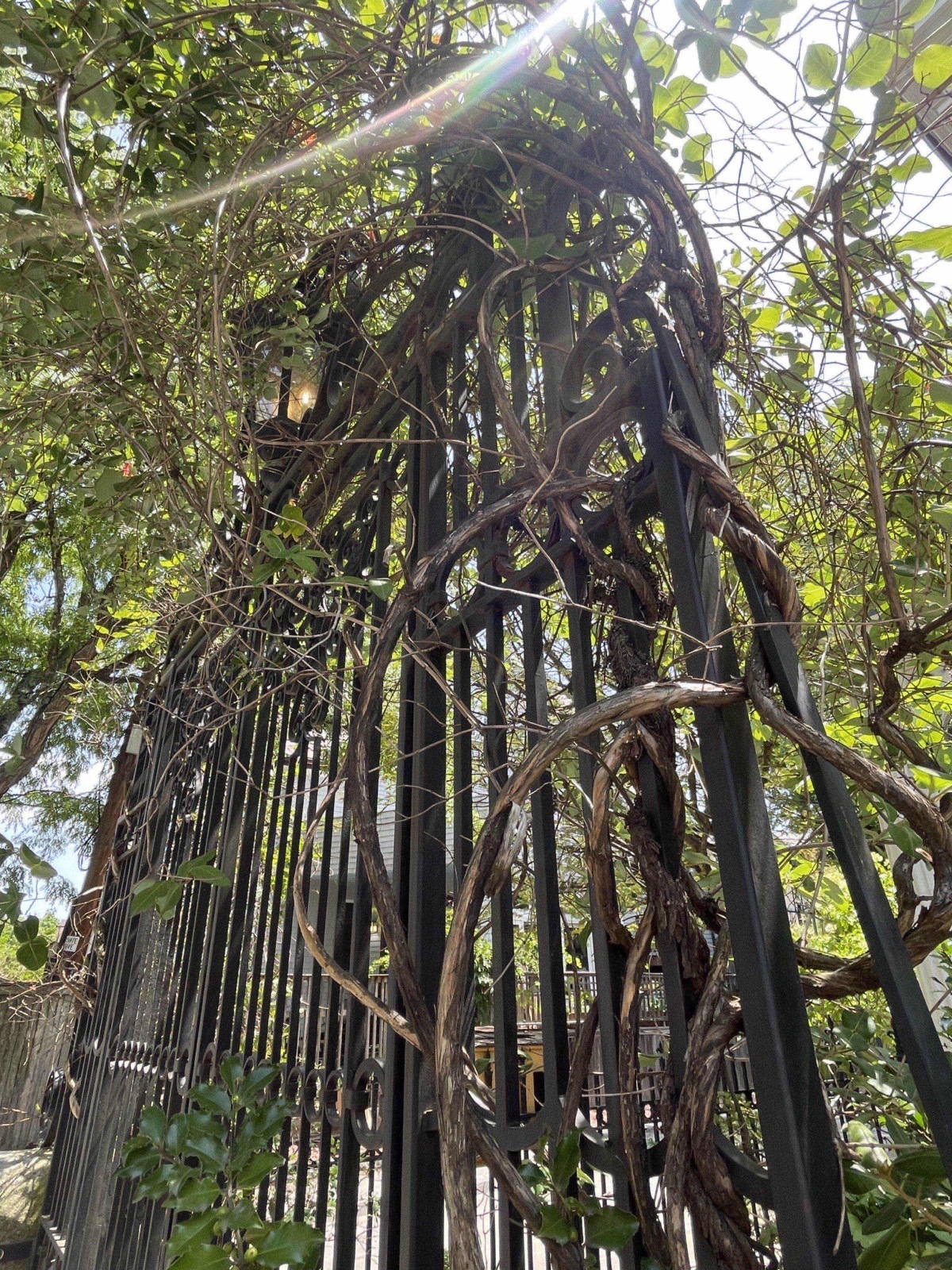
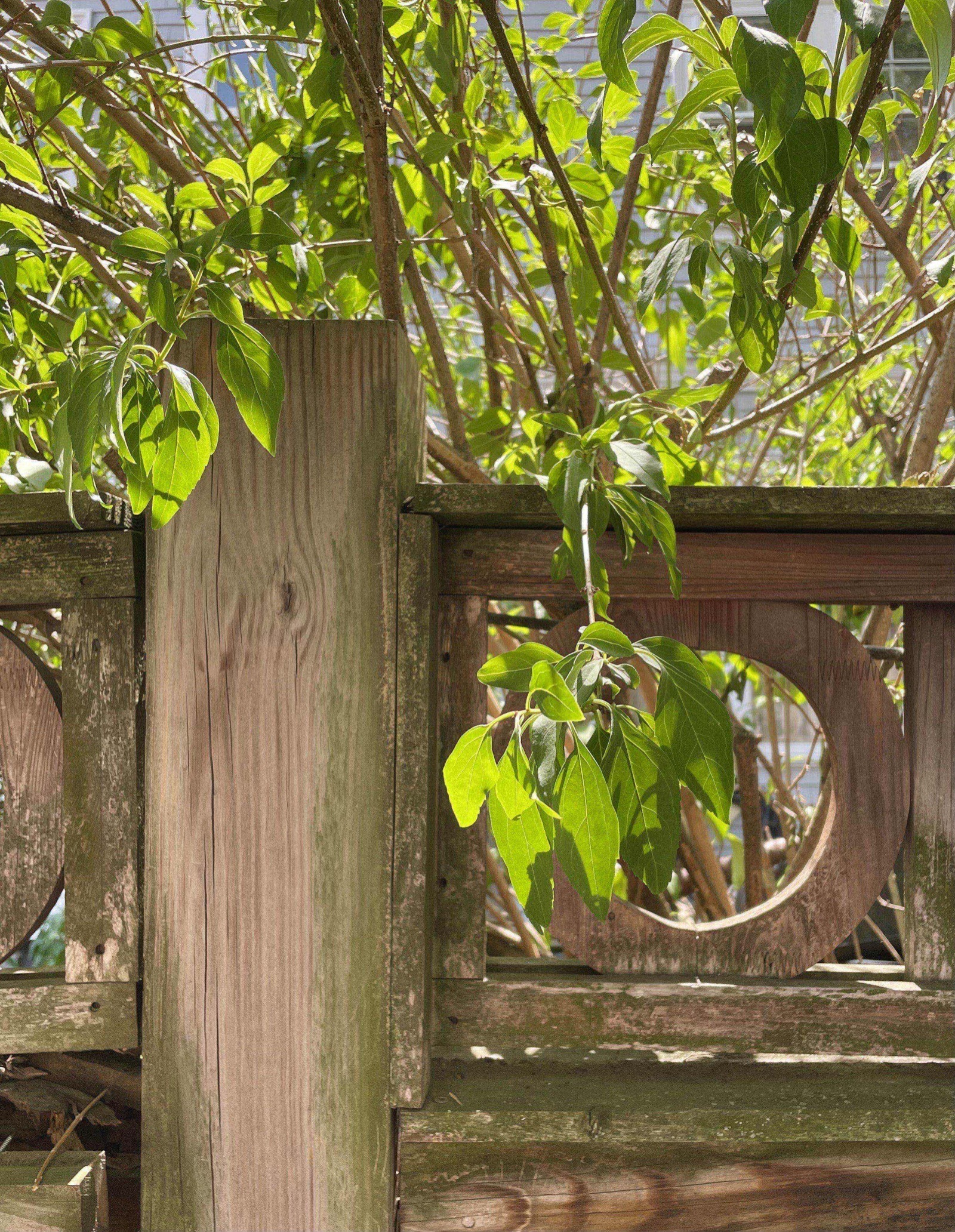
Occasionally, urban boundaries are explicitly designed and built to accomodate plants already inhabiting a place, whether out of respect or convenience:
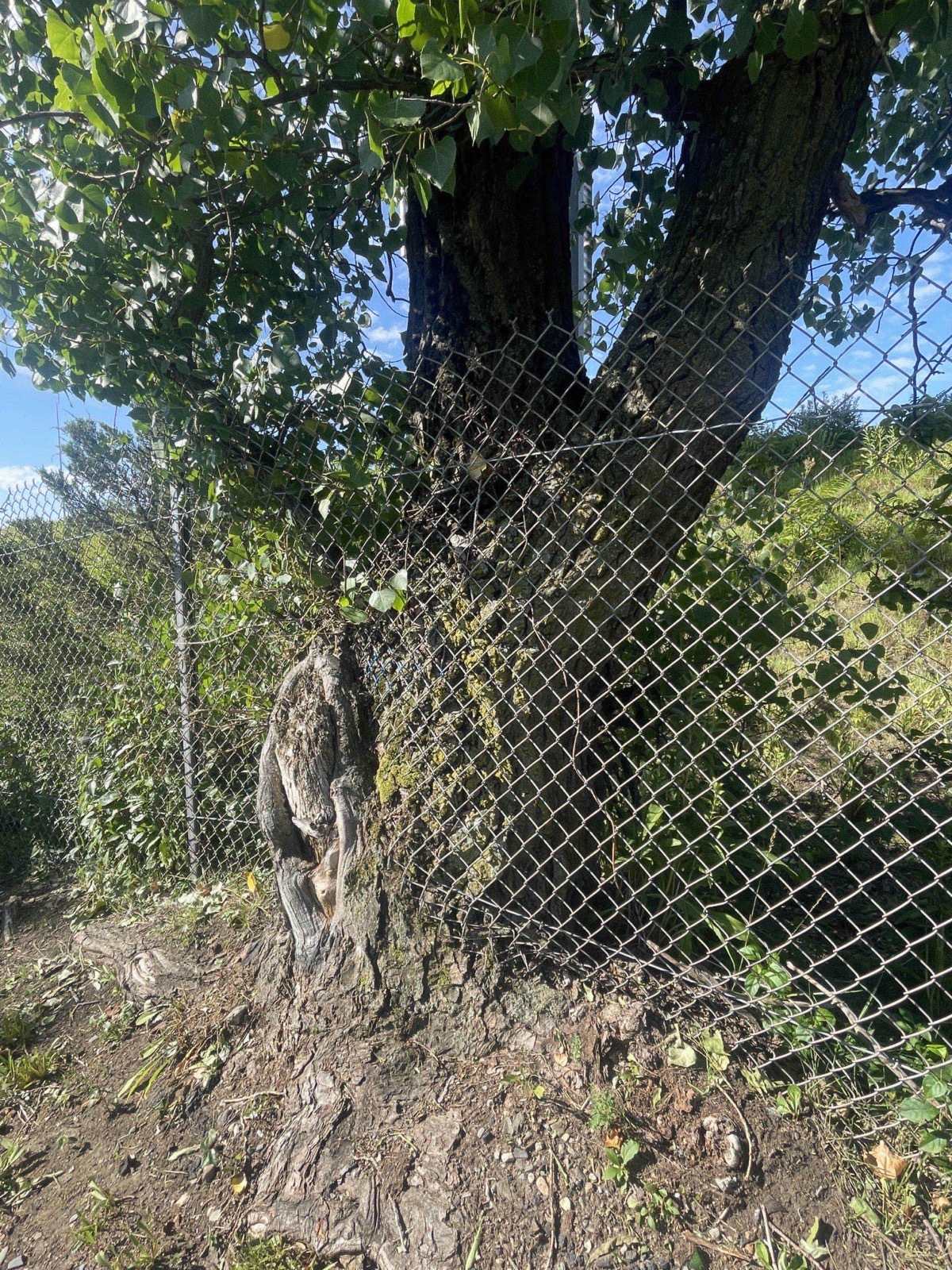
Sometimes plants are themselves recruited to make or adorn a boundary, as in the case of a hedge. It’s interesting that wikipedia explicitly defines a hedge in boundary-making terms:
A hedge or hedgerow is a line of shrubs and sometimes trees, planted and trained to form a barrier or to mark the boundary of an area, such as between neighbouring properties.
Making such a “live fence” has some benefits as the page explains, since it allows a boundary to be made with less need for additional maintenance than might be required for, say, a fence post. According to this source, there are various benefits to live fences: “Besides their main function…living fences may provide fuelwood, fodder and food, act as wind breaks or enrich the soil, depending on the species used”.
I am not sure what exactly is the deeper point to draw out in all of this. Of course there are broader themes here about how boundaries are made and contested and maintained. But what do plants draw out in particular? Maybe it is something about timescale, and ideas about what is “static” or not. Boundaries often seek to present themselves as stable, impermeable, fixed in one way or another. Plants are an interesting interlocutor, then, because they are dynamic but slow to the point of often seeming “static” in human terms. So attending to plants and boundaries draws out an interesting tension of presenting static moments of what are necessarily dynamic boundary violations – dissolving the imagined stasis of both plants and boundaries. Something like this.